
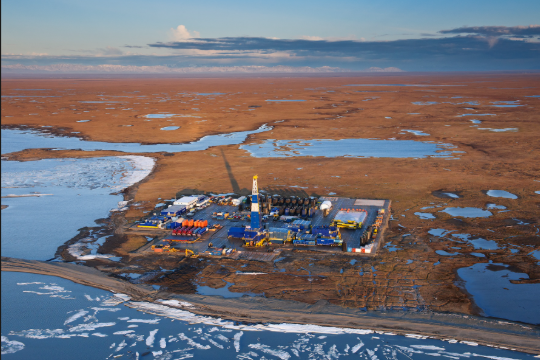
A recent auction offering oil and gas drilling rights in Alaska’s Arctic National Wildlife Refuge attracted surprisingly little interest from the energy industry, highlighting the uncertain future of Arctic fossil fuel development. Despite the availability of hundreds of thousands of acres for exploration, only a handful of bids were submitted, and participation from major oil companies was notably absent. The result contrasts sharply with expectations that the refuge’s potentially vast oil reserves would spark strong competition among energy producers.
Several factors appear to be limiting enthusiasm for the region. Developing oil fields in the remote Arctic is expensive, requiring significant investments in roads, pipelines, and other infrastructure. At the same time, investors are increasingly cautious about long-term fossil fuel projects as climate policies tighten and renewable energy continues to expand. The refuge is also one of North America’s most ecologically important landscapes, providing habitat for polar bears, migratory birds, wolves, and the Porcupine caribou herd. Environmental organizations view the weak auction turnout as a sign that economic and environmental realities are making large-scale Arctic drilling less attractive than it once seemed. More