
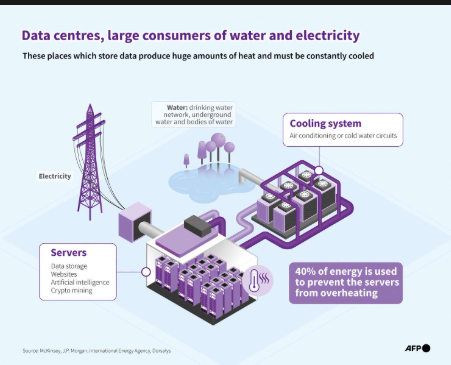
As artificial intelligence and cloud computing expand at a remarkable pace, giant data centers are consuming more electricity than ever before. To keep up with this growing demand, utilities are building new transmission lines, substations, and power infrastructure worth billions of dollars. While these investments are designed to support the digital economy, consumer advocates warn that part of the cost may be finding its way onto ordinary electricity bills. In many regions, grid upgrades are funded through utility rate structures that spread costs across all customers, raising concerns that households could end up helping finance infrastructure built primarily for large technology companies.
The issue is becoming increasingly important as data centers emerge as one of the fastest-growing sources of electricity demand worldwide. Some energy analysts estimate that data centers could account for a significant share of new power consumption over the next decade, particularly as AI applications become more widespread. Regulators and policymakers are now debating whether technology firms should bear a greater portion of the costs associated with expanding the grid. Supporters of reform argue that a “cost-causer pays” approach would protect consumers from higher electricity prices, while ensuring that the benefits and expenses of the digital revolution are distributed more fairly. More