
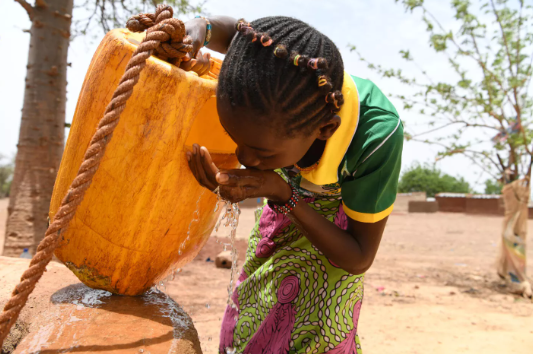
UNICEF has warned that the escalating climate crisis could severely disrupt education for nearly 520 million children across Eastern and Southern Africa by 2050, as floods, droughts, cyclones, heatwaves, and food insecurity increasingly damage schools and destabilize communities. The region is already experiencing some of the world’s fastest-rising climate pressures, with extreme weather events forcing repeated school closures, destroying classrooms, and displacing families. Countries including Mozambique, Malawi, Zimbabwe, and Somalia have faced back-to-back climate shocks in recent years, leaving millions of children without stable access to education. UNICEF says rising temperatures and prolonged droughts are also increasing child malnutrition and water scarcity, making it harder for students to attend school or concentrate in classrooms.
The agency warns that climate-related learning disruption is becoming a long-term development crisis, not just a humanitarian emergency. In many vulnerable regions, schools are doubling as emergency shelters during storms and floods, while damaged roads and infrastructure cut children off from education for weeks or even months. Girls are often among the hardest hit, as climate stress can increase child marriage, domestic labor burdens, and school dropouts. UNICEF is calling for climate-resilient schools with solar power, safe water systems, stronger buildings, and disaster-prepared learning networks that can continue operating during emergencies. Experts say the warning highlights a growing global reality: climate change is no longer only an environmental issue—it is increasingly reshaping education systems, childhood stability, and the future workforce of entire regions. More