
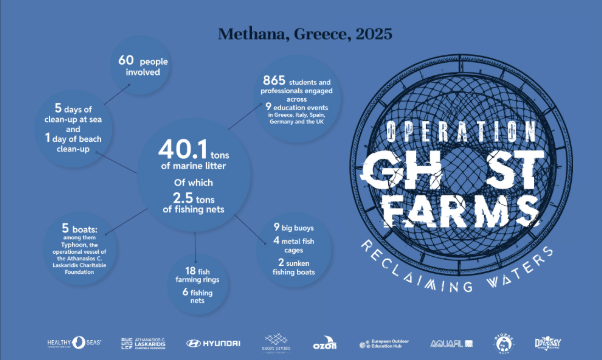
Across sections of Greece’s coastline, abandoned “ghost” fish farms are polluting coastal waters, damaging marine ecosystems, and creating growing hazards for fishing boats and commercial ships. Rusting cages, broken nets, floating plastic pipes, and submerged metal structures from old aquaculture operations have been left drifting or partially sinking in the sea after companies shut down or relocated. Environmental groups say many of these neglected fish farms continue releasing debris and microplastics into the Mediterranean, while trapped waste and leftover feed can degrade water quality and harm local marine life. In several coastal regions, fishermen have reported damaged nets and navigation problems caused by underwater farm structures that are difficult to detect, especially during poor weather or at night.
Marine experts warn that abandoned aquaculture infrastructure can also threaten biodiversity by entangling turtles, dolphins, and other sea creatures, while altering sensitive seafloor habitats. Greece is one of Europe’s largest producers of farmed sea bass and sea bream, making aquaculture a major industry for the country’s economy, but regulators and conservation groups say stronger oversight is urgently needed to ensure old sites are safely dismantled. Shipping operators have raised concerns that drifting cages and loose mooring systems could become collision risks in busy coastal waters and tourist sailing routes. Scientists say the problem reflects a wider global issue known as “ghost infrastructure,” where aging industrial equipment remains in oceans long after operations end, silently adding to marine pollution and navigational danger. More