
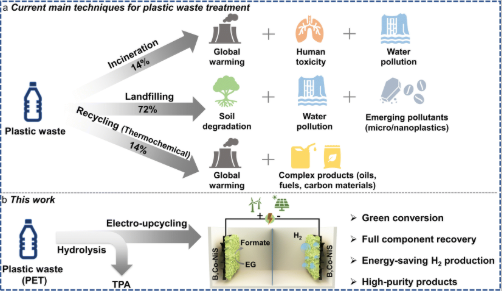
Researchers have developed a new photocatalyst system capable of converting plastic waste into hydrogen fuel using sunlight and a common acidic solution similar to battery acid. The process relies on photocatalysis, where specialized materials absorb solar energy and trigger chemical reactions that break down plastic molecules while releasing hydrogen gas. Scientists say the technology could help tackle two major global problems at once: mounting plastic pollution and the growing demand for clean energy alternatives. In laboratory experiments, the system successfully processed plastics such as PET—the material widely used in drink bottles and packaging—while generating measurable amounts of hydrogen that can later be used in fuel cells or industrial energy systems. Unlike conventional plastic recycling, which often requires high temperatures and large energy inputs, the sunlight-driven method operates under far milder conditions.
The breakthrough highlights the growing field of solar-powered chemical recycling, where waste materials are treated not as garbage but as potential energy resources. Researchers explain that sulfuric acid, commonly used in lead-acid batteries, helps accelerate the breakdown of tough plastic polymers during the reaction process. Hydrogen is considered a promising low-carbon fuel because it produces only water when used in fuel cells, but most hydrogen today is still made using fossil fuels. Scientists caution that the new technology is still in the experimental stage and must overcome scaling, cost, and efficiency challenges before industrial use becomes possible. Even so, the research points toward a future where sunlight-powered systems could simultaneously reduce landfill waste, lower plastic pollution, and produce cleaner forms of energy from materials that currently burden ecosystems worldwide. More