
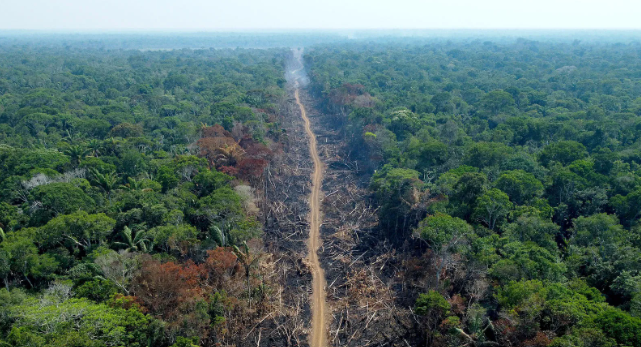
New environmental monitoring data suggests tropical forest loss declined in 2025 after reaching record-breaking levels in previous years, offering cautious optimism for some of the world’s most threatened ecosystems. Scientists tracking deforestation through satellite imagery reported reductions in forest clearing across parts of the Amazon rainforest, Central Africa, and Southeast Asia, driven by stronger environmental enforcement, Indigenous land protection efforts, and international pressure to curb illegal logging and land conversion. Brazil, home to the largest share of the Amazon, has intensified operations against illegal mining and deforestation networks, while several countries expanded protected forest zones and restoration programs. Researchers say slowing forest loss is significant because tropical forests absorb billions of tonnes of carbon dioxide annually and play a major role in stabilizing global climate and rainfall systems.
Despite the improvement, scientists warn that deforestation levels remain dangerously high and many ecosystems are still approaching ecological tipping points. Large areas continue to be cleared for cattle ranching, soy production, mining, palm oil plantations, and infrastructure expansion. Climate change itself is also increasing stress on forests through severe droughts, heatwaves, and wildfires that weaken trees and reduce their ability to store carbon. Experts emphasize that even temporary declines in forest destruction will not be enough without long-term protection policies and financial support for conservation communities. Tropical forests contain more than half of the world’s terrestrial biodiversity and support millions of Indigenous people whose livelihoods and cultures are deeply tied to forest ecosystems, making their protection critical not only for climate goals but for global ecological stability. More