
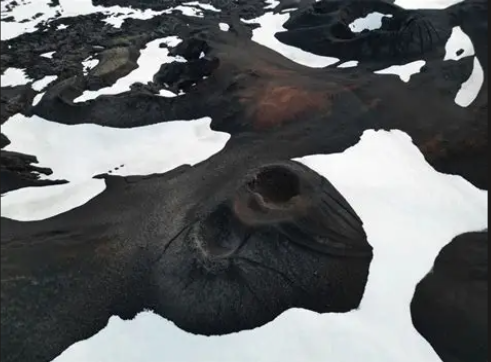
Scientists are increasingly exploring whether climate change could be influencing volcanic activity in Iceland, a country that sits atop one of the world’s most active volcanic regions. As rising global temperatures accelerate the melting of Iceland’s glaciers, billions of tonnes of ice are being removed from the land surface. Researchers explain that glaciers act like enormous weights pressing down on the Earth’s crust. When this weight is reduced, the land slowly rebounds upward, a process known as isostatic uplift. This change in pressure can allow magma beneath the surface to expand and move more easily, potentially increasing the likelihood of volcanic eruptions over time.
Evidence from geological records suggests that periods of rapid glacier retreat in the past were sometimes followed by heightened volcanic activity. Iceland has already lost a significant portion of its glacier mass over the last century, and some glaciers are projected to shrink dramatically by the end of this century if global warming continues. While scientists stress that climate change does not directly cause volcanoes to erupt, it may influence the conditions that make eruptions more likely in volcanic regions covered by ice. The research highlights an often-overlooked connection between climate change and Earth’s geological systems, showing that the impacts of a warming world can extend far beyond weather, ecosystems, and sea-level rise. More