
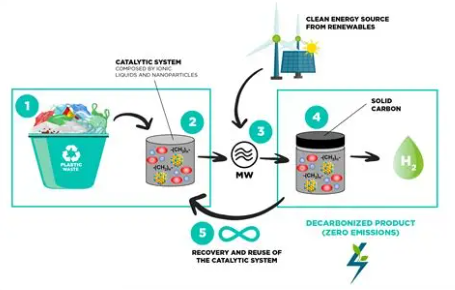
Scientists from the Nanyang Technological University, working with international research partners, have developed a technique that converts discarded plastic waste into clean hydrogen fuel using sunlight. The research, carried out in Singapore and other collaborating laboratories, uses advanced photocatalysts to break down common plastics such as bottles, packaging materials, and food containers. In some recent experiments, researchers also incorporated sulfuric acid recovered from old lead-acid batteries, demonstrating how multiple waste streams can be transformed into valuable resources. The innovation addresses a growing global problem, as the world produces more than 460 million tonnes of plastic annually, with a large share ending up in landfills, rivers, and oceans.
The potential impact of the technology extends beyond waste management. Hydrogen is considered a key clean fuel for industries, transportation, and power generation because it produces no carbon emissions at the point of use. By turning plastic waste into hydrogen, the process could reduce pollution, lower dependence on fossil fuels, and create new economic opportunities in recycling and renewable energy sectors. If successfully scaled up, future facilities could convert large volumes of hard-to-recycle plastic into clean fuel while reducing greenhouse gas emissions and easing pressure on landfills and marine ecosystems. The breakthrough also supports the concept of a circular economy, where waste materials are reused as valuable inputs rather than discarded as environmental burdens. More