
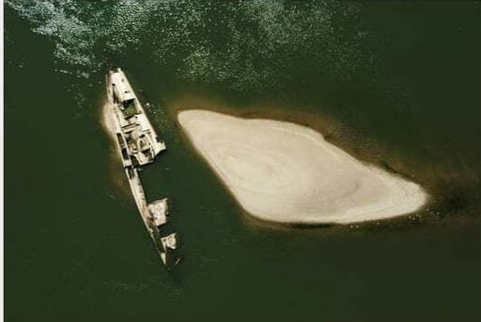
Exceptionally low water levels along the Danube River have created a growing environmental and economic challenge in Serbia and Croatia, where boats have been left stranded and decades-old shipwrecks have re-emerged from the riverbed. Prolonged heatwaves, below-average rainfall and persistent drought have reduced the Danube to some of its lowest levels in decades, disrupting one of Europe’s busiest inland waterways. In eastern Serbia, the falling river has exposed the remains of World War II-era German naval vessels, while navigation has become increasingly difficult for cargo barges and passenger boats that rely on the river for transport and trade.
The shrinking Danube is affecting far more than shipping. Lower river flows are reducing freshwater availability, stressing aquatic ecosystems and increasing concerns over water quality and biodiversity across the basin. Authorities in Serbia and Croatia are monitoring navigation routes and implementing measures to keep river traffic moving, while climate scientists warn that prolonged droughts and more frequent heatwaves are making extreme low-water events increasingly common across Europe. The situation highlights how climate change is reshaping major river systems, threatening ecosystems, regional economies and the communities that depend on them. More