
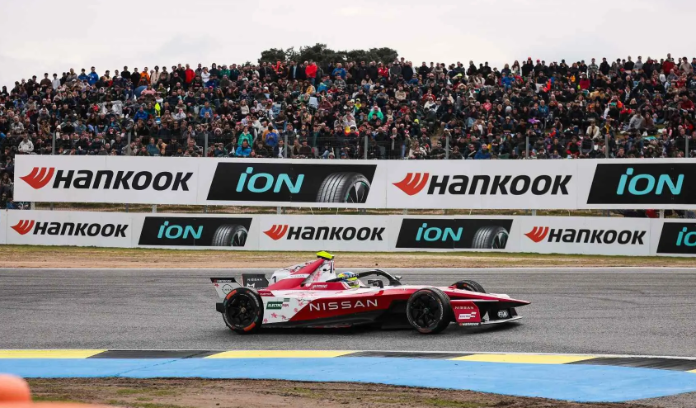
Formula E is no longer just about electric cars racing around city streets—it has become a testing ground for the future of mobility. Since its launch in 2014, the championship has helped manufacturers experiment with battery performance, regenerative braking, electric motors and energy efficiency under some of the most demanding conditions. The next-generation GEN4 car is expected to reach 600 kW of power, equivalent to about 815 bhp, while recovering a significant share of its energy through regenerative braking. What happens on the racetrack can eventually find its way into everyday vehicles, helping manufacturers develop EVs that are faster, more efficient and better at managing energy. Companies such as Jaguar, Nissan and Porsche are already using motorsport to push electric technology forward, showing that the distance between a racing laboratory and the family car in a driveway is becoming increasingly small.
But Formula E’s bigger contribution may be its attempt to make electric mobility more sustainable beyond the battery and motor. The championship reports that its emissions per race have fallen by 41% compared with its Season 5 baseline, supported by changes in logistics, freight and energy use. Its GEN4 programme is also targeting greater use of recycled and renewable materials, including tyres containing 65% renewable and recycled materials, while the car is being designed with recyclability and resource efficiency in mind. The important question, however, is whether these innovations can move from an expensive global racing series into affordable electric cars for ordinary consumers. Formula E cannot solve the EV transition on its own, but it is demonstrating something important: the road to cleaner transport may be tested at 200 km/h before it reaches the streets. More