
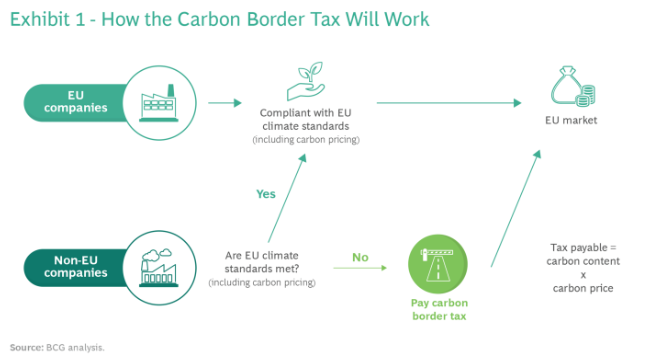
The European Union is taking steps to make it harder to suspend its Carbon Border Adjustment Mechanism (CBAM), reinforcing one of the world’s most ambitious climate policies. CBAM places a carbon price on imported products such as steel, cement, aluminum, fertilizers, hydrogen, and electricity, ensuring that foreign manufacturers face similar carbon costs to companies operating within the EU. European policymakers argue that weakening or frequently suspending the mechanism could undermine efforts to cut emissions and create an uneven playing field for industries that are investing heavily in cleaner technologies.
The policy is expected to play a major role in helping the EU meet its target of reducing greenhouse gas emissions by at least 55% by 2030 and reaching net-zero emissions by 2050. By making importers pay for the carbon intensity of their products, the EU hopes to encourage cleaner manufacturing practices worldwide while preventing companies from relocating production to countries with weaker environmental regulations. However, the mechanism has also sparked debate among trading partners, particularly developing nations, which argue that the additional costs could affect exports and economic growth. As CBAM moves toward full implementation, it is increasingly becoming a global test case for how climate policy and international trade can be linked to accelerate industrial decarbonization. More