
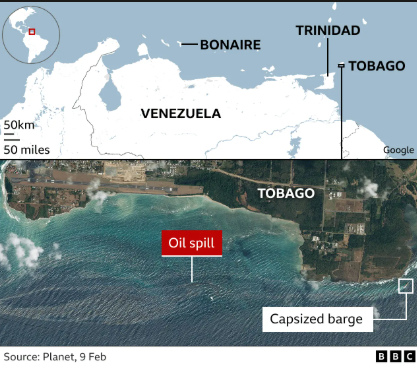
A growing oil spill in waters between Venezuela and Trinidad and Tobago is raising serious environmental concerns as authorities warn that the pollution could spread across important fishing grounds and coastal ecosystems. Satellite observations suggest the slick covers a significant area of ocean, increasing the risk of contamination along shorelines and marine habitats. Fishing communities are particularly vulnerable, as oil pollution can force temporary fishing bans, damage fishing equipment, and reduce catches of commercially important species such as snapper, grouper, shrimp, and crab. In coastal regions where thousands of families depend on fishing for income and food, even a short-term disruption can have major economic consequences.
The environmental impacts could extend far beyond the immediate spill zone. Oil can coat mangrove forests, seagrass beds, and coral reefs—ecosystems that serve as nurseries for many marine species and help protect coastlines from erosion and storms. Exposure to oil can harm fish eggs and larvae, reduce oxygen levels in the water, and affect seabirds, sea turtles, and marine mammals through poisoning or habitat loss. Scientists warn that recovery from oil contamination can take years, particularly in sensitive tropical ecosystems. The incident highlights the ongoing environmental risks associated with offshore oil production and the importance of rapid response efforts to minimize long-term damage to biodiversity, fisheries, and coastal economies throughout the Caribbean region. More