
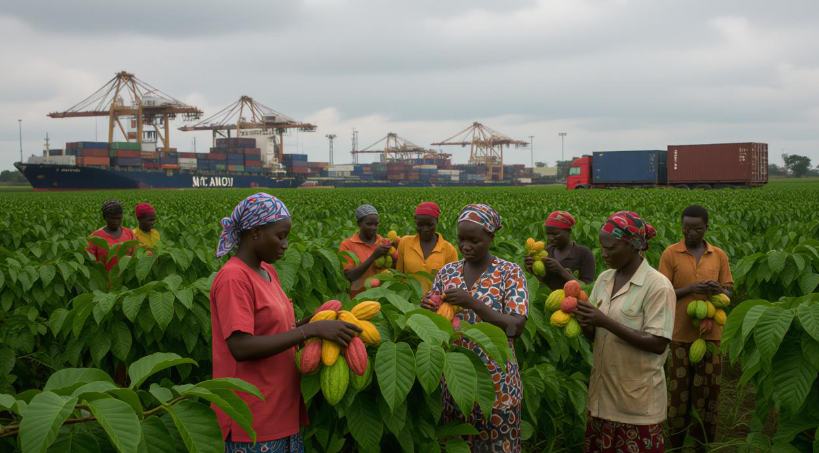
Ivory Coast, the world’s largest cocoa producer, is facing the prospect of major congestion at its Abidjan and San Pedro ports as the 2026/27 main cocoa harvest gets delayed. Industry sources say difficult weather conditions; inadequate farm maintenance and an unusually strong mid-crop have pushed the main harvest back by an estimated 8–10 weeks. Although the main season officially begins on September 1, weekly arrivals are expected to remain below 15,000 tonnes in September and 25,000 tonnes in October, with larger volumes reaching ports from late October and rising sharply through December. Around 900,000 tonnes of cocoa are expected to arrive at Ivorian ports between October and December, creating pressure on storage and shipping capacity.
The environmental dimension is closely linked to the European Union’s Deforestation Regulation (EUDR), which will apply to cocoa imports from 30 December 2026 for large and medium-sized operators. The regulation requires companies to demonstrate that cocoa entering the EU market is deforestation-free and legally produced, with supply chains increasingly required to provide traceability back to production areas. The combination of a delayed harvest and the approaching regulation could encourage exporters to move large quantities before the deadline, creating a logistical rush. At the same time, the new rules are designed to address a major environmental problem: cocoa production has historically been associated with forest loss in West Africa. The situation demonstrates how climate-related production challenges, agricultural practices, global commodity trade and forest protection are increasingly interconnected. More