
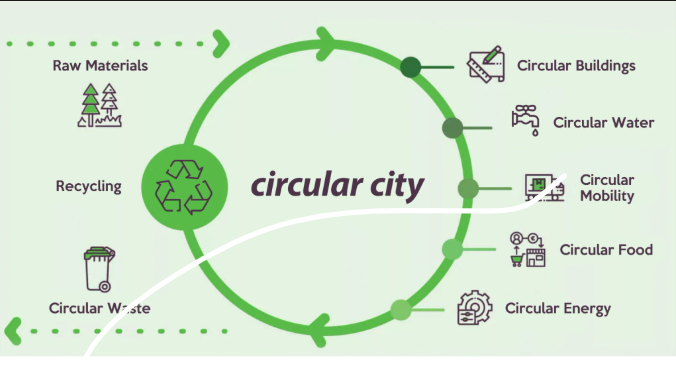
Rethinking how we design, build, and reuse our cities could deliver one of the biggest climate wins of this decade. Research shows that applying circular economy principles to the built environment—prioritising reuse, refurbishment, and low-carbon materials—could cut emissions from buildings and construction by up to 75% by 2050. The largest savings come from reducing reliance on cement and steel, which together generate a major share of global carbon pollution. Instead of demolishing structures, circular strategies extend building lifespans, recover materials, and design components for future reuse, preventing billions of tonnes of emissions while lowering long-term resource demand.
Cities are already proving how this works in practice. Amsterdam has embedded circular construction into its urban strategy, mandating material passports for new buildings so components can be reused decades later. Copenhagen is scaling adaptive reuse—transforming old industrial and commercial buildings rather than replacing them—to cut construction emissions while preserving urban heritage. Similar approaches are emerging across European and Asian cities, where reuse-first planning rules, retrofit programmes, and recycled material targets are becoming climate tools. The message is clear: without circular cities, emissions will be locked in for generations—but with them, the places we live can become active agents of climate repair. More