
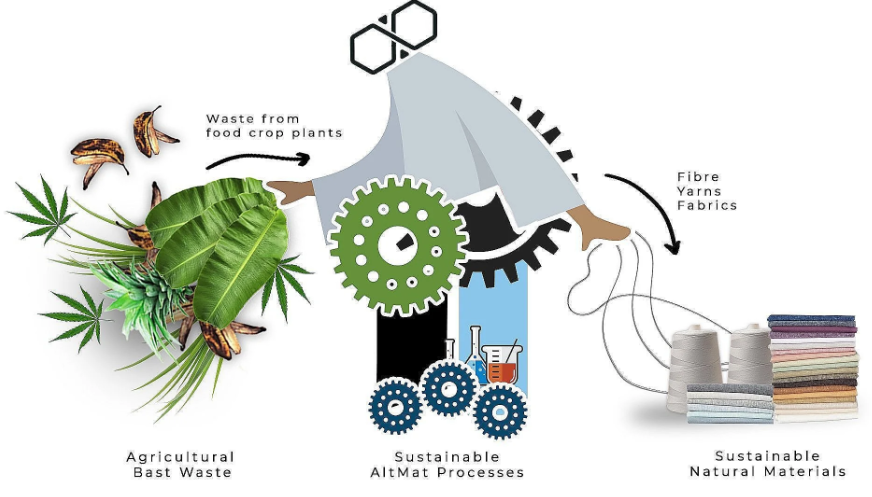
Textile innovators are turning agricultural crop waste into eco-friendly fabrics, offering the fashion industry a cleaner alternative to conventional materials such as cotton and synthetic fibres. Residues from crops including banana stems, pineapple leaves, hemp stalks, rice straw, sugarcane bagasse, and flax are being processed into durable natural fibres for use in clothing, footwear, and accessories. By converting agricultural by-products that are often burned or discarded into high-value textiles, manufacturers can reduce waste, lower greenhouse gas emissions, and decrease reliance on resource-intensive fibre production. These bio-based fabrics also require fewer virgin raw materials, supporting a more circular and sustainable textile economy.
The growing adoption of crop waste fabrics comes as the global fashion industry seeks to reduce its environmental footprint, with textile production accounting for significant water consumption, chemical use, and carbon emissions. Advances in fibre extraction and processing technologies are improving the quality, durability, and scalability of these sustainable materials, making them increasingly attractive to designers and apparel brands. Researchers and industry experts believe that transforming agricultural residues into wearable textiles not only creates new income opportunities for farmers but also helps divert biomass waste from landfills and open-field burning, contributing to cleaner production systems and more sustainable fashion supply chains. More