
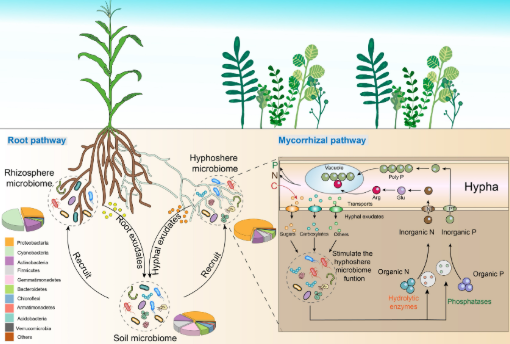
Beneath forests, grasslands, and even some crops lies a vast living network of mycorrhizal fungi that connects plant roots in a symbiotic system often compared to a natural internet. These fungi trade minerals and water for carbon from plants, forming relationships that can extend across kilometres of soil. In mature forests, up to 80–90% of plant species depend on these fungal partnerships to access nutrients they otherwise couldn’t reach. Beyond nutrition, these networks also transmit chemical signals—helping nearby plants respond to drought stress, pest attacks, or changing soil conditions, effectively increasing the resilience of entire ecosystems during climate extremes.
But this underground system is fragile. Intensive farming practices, repeated tilling, synthetic fertilisers, and land clearing disrupt fungal hyphae—the thread-like structures that form the network—breaking connections that can take years to rebuild. Research also shows that soil warming and drying linked to climate change are altering fungal composition, sometimes reducing their ability to store carbon and support plant growth. Since these fungi help lock vast amounts of carbon into soils globally, their degradation doesn’t just affect plant health—it can also weaken one of Earth’s largest natural carbon storage systems. Scientists warn that protecting soil biodiversity is no longer optional; it is central to both food security and climate stability, even if most of this critical infrastructure remains invisible beneath our feet. More