
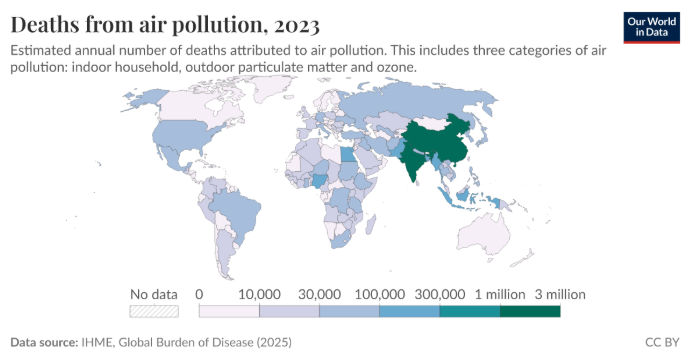
Reducing deaths linked to air pollution is not simply a matter of lowering emissions—it also depends on how vulnerable populations are protected and how health systems respond. Fine particulate matter (PM2.5), nitrogen dioxide, and ozone are responsible for millions of premature deaths globally each year, according to major global health assessments. But the same level of pollution exposure can have very different health outcomes depending on age, nutrition, pre-existing conditions, housing quality, and access to healthcare. For example, elderly populations and people with cardiovascular or respiratory diseases are far more likely to suffer fatal outcomes even at moderate pollution levels, showing that exposure alone does not fully explain mortality risk.
Public health researchers also emphasize that structural factors shape how pollution translates into deaths. Weak healthcare systems, limited early diagnosis of respiratory illness, and lack of access to preventive care can significantly increase fatality rates even when air quality improves. Social inequalities—such as living near highways, industrial zones, or biomass-burning areas—also concentrate risk in specific communities. This means that reducing air pollution deaths requires a dual approach: cutting emissions at the source while simultaneously strengthening healthcare access, improving urban planning, and addressing socioeconomic vulnerabilities. Without these parallel measures, cleaner air alone may not deliver the full expected reduction in mortality. More