
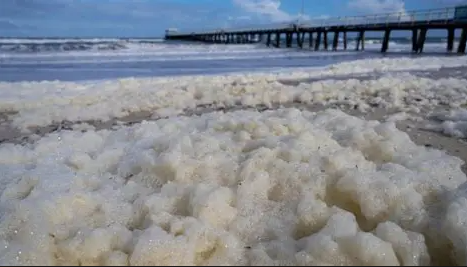
A new scientific report has revealed that South Australia’s catastrophic harmful algal bloom was not caused by a single event, but by a rare combination of climate and environmental conditions. Researchers from the South Australian Research and Development Institute (SARDI) found that nutrient-rich floodwaters from the 2023 River Murray floods, strong coastal upwelling that brought deep-ocean nutrients to the surface, and an intense marine heatwave together created the ideal conditions for the toxic algae Karenia cristata to flourish. First detected in March 2025, the bloom rapidly spread along South Australia’s coastline, highlighting how multiple climate-driven factors can interact to trigger large-scale ecological crises.
The algal bloom expanded across more than 20,000 square kilometres of coastal waters, becoming one of Australia’s most severe marine environmental disasters. It led to the deaths of millions of marine organisms, including fish, sharks, rays, shellfish, seabirds, and marine mammals, while also disrupting fisheries, aquaculture, tourism, and coastal livelihoods. Scientists say the findings underscore the growing influence of climate change, as warmer oceans and more extreme weather events increase the risk of prolonged harmful algal blooms. The South Australian Government has announced continued investment in research, monitoring, and early-warning systems to strengthen preparedness and protect marine ecosystems from similar climate-related events in the future. More