
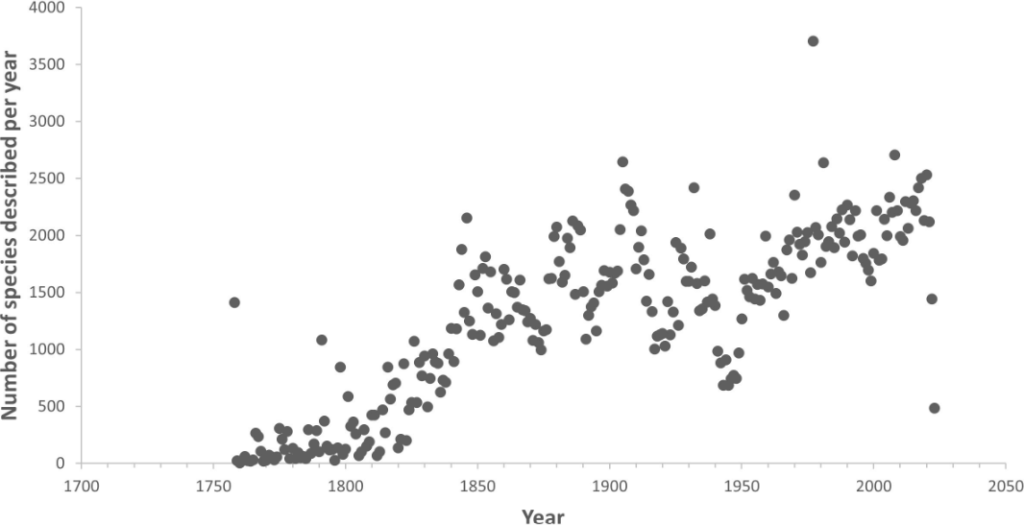
Scientists are identifying new plant, animal, fungi, and microorganism species at a faster rate than previously anticipated, driven by advances in DNA sequencing, artificial intelligence, satellite mapping, and exploration of remote ecosystems. Every year, researchers formally describe around 18,000 to 20,000 new species, with many discoveries coming from biodiversity hotspots such as tropical rainforests, deep oceans, caves, and mountain regions. Recent expeditions have uncovered previously unknown frogs, orchids, corals, insects, reptiles, and marine organisms, while genetic analysis has revealed numerous “cryptic species” that appear identical to known organisms but are genetically distinct.
Despite the accelerating pace of discovery, scientists estimate that Earth may be home to between 8 and 10 million species, of which only about 2 million have been formally identified. Many newly discovered species are already under threat from habitat destruction, climate change, pollution, invasive species, and overexploitation, raising concerns that some could disappear before they are fully studied. Researchers emphasise that documenting biodiversity is essential for conservation planning, ecosystem restoration, and understanding the ecological processes that support food security, medicine, and climate resilience, making species discovery a critical component of global environmental protection efforts. More