
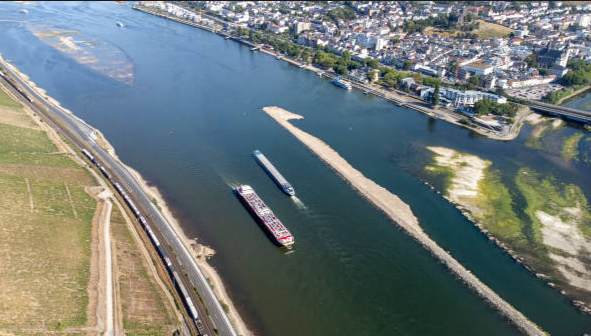
The Rhine River has fallen to another record low, with the continuing heatwave and months of dry weather leaving one of Europe’s most important waterways struggling to carry normal levels of cargo. At Kaub in Germany, one of the river’s key shipping bottlenecks, water levels fell to just 6 centimetres on August 14, far below the previous record low of 25 centimetres set in 2018. The shallow river is making it increasingly difficult for cargo vessels to operate fully loaded. The Rhine is a major transport route for chemicals, coal, steel, agricultural products, fuel and other industrial goods, so what begins as a water shortage is quickly becoming a problem for factories, businesses and supply chains across Germany and neighbouring countries.
With barges unable to carry their usual loads, companies are now shifting more goods to trucks and trains, but this comes with higher costs, delays and additional pressure on roads and rail networks. German chemical companies, steelmakers, energy businesses and agricultural traders are already warning about transport bottlenecks and possible production problems. Germany’s central bank has also warned that depleted rivers are weighing on the country’s economic recovery, while the European Commission says drought has affected large parts of Europe since spring, with hot and dry conditions expected to continue. The Rhine crisis therefore tells a much bigger story: when rivers become too shallow to move goods, the impact does not stay at the riverbank—it travels through factories, markets, prices and entire economies. More