
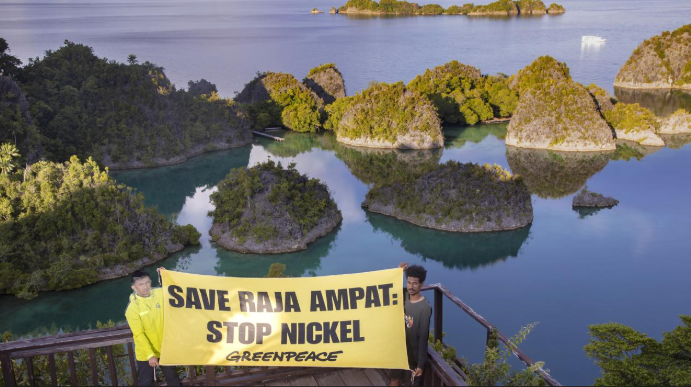
Nickel mining remains a major environmental flashpoint in Raja Ampat, Indonesia, despite strong protests from Indigenous communities, environmental groups and thousands of members of the public. A Greenpeace investigation found 16 nickel mining licences across the archipelago, including five that were active when the investigation was conducted; 12 of the 16 licences are located within the UNESCO-listed Raja Ampat Global Geopark. Although the Indonesian government announced in June 2025 that four active licences would be revoked, the PT Gag Nikel operation was allowed to continue and was subsequently given permission to resume operations. Greenpeace has warned that previous licences in Raja Ampat have been reactivated, raising concerns that cancelled permits may not provide permanent protection.
The environmental stakes are enormous. Greenpeace documented more than 500 hectares of forest and natural vegetation cleared across several mining islands, with exposed soil and runoff contributing to coastal sedimentation and increasing water turbidity around coral ecosystems. Raja Ampat is internationally recognised for its exceptional marine biodiversity, while its reefs support fisheries, tourism and local livelihoods. Greenpeace says the region’s nickel is ultimately linked to industrial processing at Indonesia Weda Bay Industrial Park, where nickel is used for stainless steel and battery-related industries. The controversy exposes a difficult contradiction in the global energy transition: nickel is promoted as a critical mineral for clean technologies, but extracting it from fragile islands can destroy the very ecosystems that climate action is supposed to protect. The challenge for Indonesia is therefore not simply producing more nickel, but deciding where mining should never be allowed—and ensuring that environmental protection and Indigenous rights are not sacrificed for the green economy More