
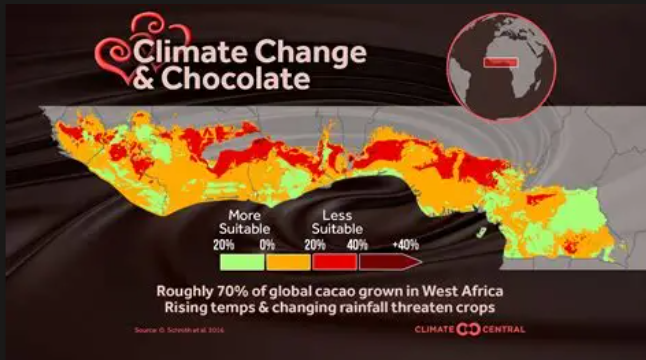
Chocolate is often associated with environmental concerns because cocoa farming can contribute to deforestation, biodiversity loss, and greenhouse gas emissions. However, new research shows that the climate impact of chocolate varies dramatically depending on its ingredients. The largest share of emissions often comes not from the cocoa itself but from added ingredients such as dairy. Milk chocolate generally has a much higher carbon footprint than dark chocolate because dairy production requires significant land, water, and feed resources while generating methane emissions from livestock. As a result, chocolates with higher cocoa content and fewer dairy ingredients tend to have a lower overall environmental impact.
Scientists analyzing the life cycle of chocolate products found that ingredient choices can make a substantial difference in emissions, land use, and resource consumption. Sustainably sourced cocoa, combined with plant-based ingredients and responsible farming practices, can further reduce chocolate’s environmental footprint. Researchers also emphasize the importance of protecting tropical forests where cocoa is grown, as preventing deforestation can significantly lower the climate cost of chocolate production. For environmentally conscious consumers, understanding what goes into a chocolate bar may be just as important as knowing where it comes from, making ingredient labels an unexpected guide to more climate-friendly choices. More