
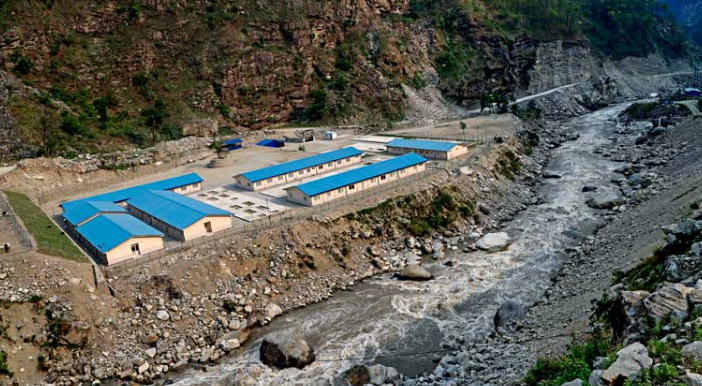
Nepal is caught between its ambition to expand clean electricity and its responsibility to protect some of the country’s most important forests, rivers and wildlife habitats. In January 2025, Nepal’s Supreme Court ruled that a 2024 legal amendment allowing commercial infrastructure such as hydropower projects inside protected areas was invalid, saying it conflicted with the constitutional principle of environmentally responsible development and the idea of protecting resources for future generations. But the full text of the court’s decision has still not been published, creating a major legal uncertainty. Taking advantage of this gap, the government has continued approving projects. Since January 2026, 10 private hydropower projects with a combined capacity of more than 360 MW have received permission, affecting around 85 hectares of forest land in and around protected areas including Annapurna, Gaurishankar and Kanchenjunga, as well as the buffer zones of Makalu-Barun and Langtang national parks. Nepal has 13 national parks, six conservation areas, a wildlife reserve and a hunting reserve, together covering nearly one-quarter of the country’s land area.
The pressure is coming from both sides. Nepal sees hydropower as a major opportunity for economic development, electricity generation and exports, while private developers argue that uncertainty is putting billions of dollars of investment at risk. The industry says the Supreme Court ruling has created uncertainty for as many as 242 hydropower projects with a combined capacity of about 17,000 MW. But conservationists warn that Nepal’s rivers do not exist separately from the ecosystems around them. Protected landscapes provide habitat for snow leopards, red pandas, pangolins and important freshwater species, and new dams, roads and transmission lines can fragment forests and disturb wildlife corridors. Nepal’s conservation success makes the debate even more important: its tiger population increased from 121 in 2010 to 355 in 2023, showing what long-term protection can achieve. The real question for Nepal is therefore not whether hydropower is clean compared with fossil fuels, but where clean energy should be built and how much natural habitat can be sacrificed in the name of a green-energy transition. If protected areas can be opened whenever development pressure rises, the meaning of “protected” itself could gradually become weaker. More