
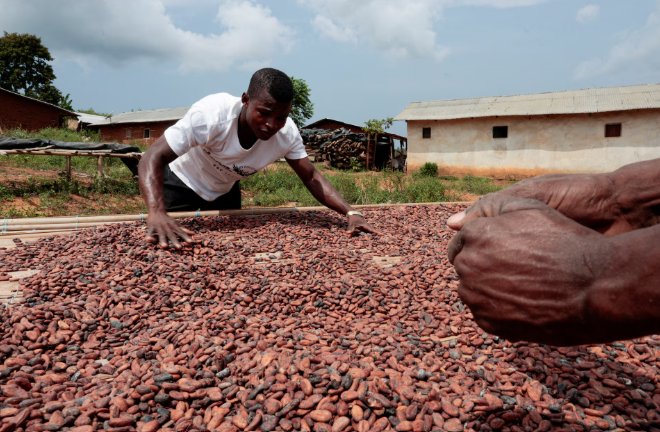
Ivory Coast’s cocoa farmers are calling for more sunshine to strengthen the country’s September-to-February main cocoa crop, after weeks of heavy rain and persistent cloud cover across several growing regions. Ivory Coast is the world’s largest cocoa producer, making its weather conditions important not only for millions of farmers but also for the global chocolate supply chain. Although recent rainfall was below average in some areas and helped dry waterlogged soils, farmers say the combination of cloudy skies, high humidity and cooler conditions could slow flowering and increase the risk of crop diseases. In the western cocoa-growing region of Soubre, only 7.3 mm of rain was recorded in the latest week reported by Reuters—23.6 mm below the five-year average—yet farmers still wanted more sunshine. Weekly temperatures across the country ranged from 24.4°C to 28.1°C.
The situation illustrates how increasingly unpredictable weather is becoming a major risk for cocoa production. Farmers say flowering will continue until September, and the eventual size of the crop will depend on how many flowers survive and develop into young cocoa pods. In regions including Daloa, Bongouanou and Yamoussoukro, farmers reported flowers and young pods developing, but warned that cold winds and continued cloud cover could slow growth. The problem is not simply too much or too little rain—the cocoa tree needs the right balance of moisture and sunlight. After heavy rains flooded plantations in late June, farmers also feared that prolonged humidity could encourage disease. With Ivory Coast and Ghana together accounting for roughly two-thirds of global cocoa production, a weather-related decline in the West African crop can quickly become a global concern, potentially affecting cocoa prices, chocolate manufacturers and consumers far beyond Africa. More