
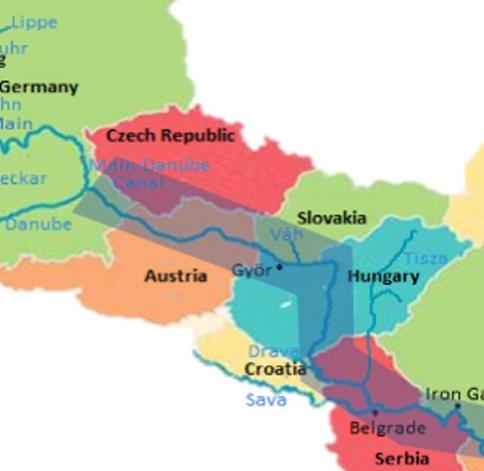
Hungary has taken an unusual emergency step to protect its Paks nuclear power plant, deliberately sinking two 80-metre barges in the Danube to raise the river level around the plant. The move comes after a historic drought pushed the Danube to record-low levels, leaving Paks struggling to get enough water for its cooling system. The plant, which normally provides a major share of Hungary’s electricity, had fallen to only about 25% of its capacity, with just two of its eight turbines operating. Authorities feared that another turbine could also be forced to shut down if the river level dropped further.
The barges are being used as a temporary underwater barrier, or sill, to slow the flow and create a higher water level near the plant while engineers work on a more permanent solution. Authorities have also released additional water into the Danube from a nearby branch, raising the river level by around 2 centimetres. The situation is becoming a powerful warning about how drought and extreme heat can affect even critical energy infrastructure. Hungary is not alone: Romania has already faced nuclear shutdowns because of low Danube levels, while Bulgaria has also had to reduce nuclear output. What was once considered a river-management problem is now becoming an energy-security problem, showing how a hotter and drier climate can challenge the reliability of traditional power systems. More