
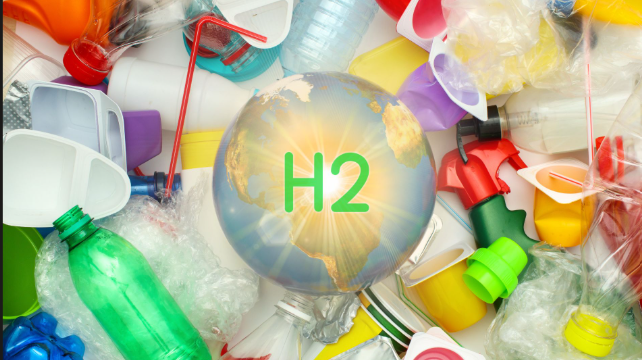
What if the plastic bottles, packaging, and discarded containers piling up around the world could become a source of clean energy? Scientists have developed an innovative method that transforms plastic waste into hydrogen fuel using sunlight and advanced photocatalysts. Instead of sending plastics to landfills or allowing them to pollute oceans and ecosystems, the process breaks them down and releases hydrogen—a clean fuel that emits only water when used. The development is particularly significant as global plastic production now exceeds 460 million tonnes each year, while less than 10% of plastic waste is effectively recycled.
The technology offers a double environmental benefit: reducing plastic pollution while producing renewable energy. In recent experiments, researchers successfully converted common plastics into hydrogen and valuable chemical compounds under relatively mild conditions, requiring far less energy than many conventional hydrogen-production methods. Some systems have even used waste sulfuric acid recovered from old vehicle batteries, turning two problematic waste streams into useful resources. While the technology is still being refined for large-scale use, experts believe it could play an important role in creating a circular economy where waste is no longer discarded but becomes a valuable raw material for clean energy production. More