
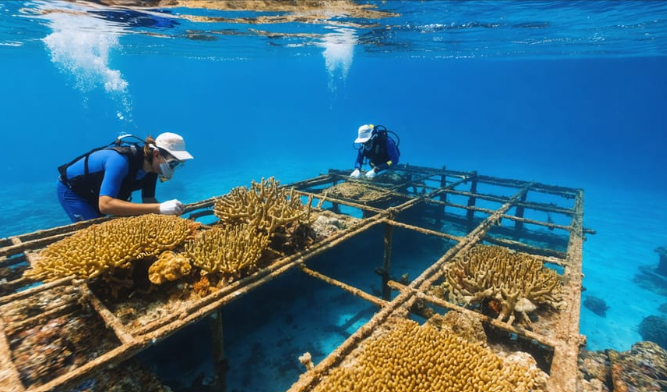
Commercial coral farming is transforming reef restoration by growing and transplanting corals at rates far exceeding natural regeneration. Using underwater nurseries and land-based aquaculture systems, restoration teams cultivate healthy coral fragments before attaching them to degraded reefs. Scientists report that these methods can restore coral cover up to 50 times faster than natural recovery in damaged areas, offering new hope for ecosystems devastated by marine heatwaves, pollution, destructive fishing, and coastal development. Fast-growing species such as staghorn and elkhorn corals are among the primary candidates for large-scale restoration because they provide critical habitat for reef fish and other marine life.
The rapid expansion of commercial coral farming is creating new opportunities for conservation organizations, tourism operators, and coastal communities to work together in protecting marine biodiversity. Advances in coral micro fragmentation, selective breeding of heat-tolerant corals, and genetic research are improving the survival of transplanted colonies under changing ocean conditions. Healthy coral reefs support nearly 25% of all marine species despite covering less than 1% of the ocean floor and contribute billions of dollars annually to fisheries, tourism, and coastal protection. Experts stress that while coral farming is becoming an effective restoration tool, reducing greenhouse gas emissions and improving water quality remain essential for ensuring reefs can survive over the long term. More