
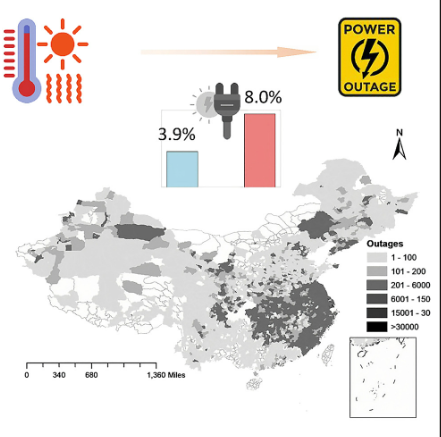
China’s latest heatwave is putting its northern power networks under serious pressure as temperatures climb and millions of people turn to air-conditioning. Power loads have reached record levels in several northern and northeastern regions, while China’s national electricity load has already risen to around 1,508 gigawatts, about 3.9% above the previous peak recorded in 2024. The pressure is particularly strong in provinces such as Hebei, Shandong, Shanxi and Inner Mongolia, where extreme heat is driving demand from households as well as factories and commercial buildings. China’s grid operators have so far managed to maintain stable supplies by moving electricity between regions and increasing generation, but the repeated records show how vulnerable electricity systems can become when extreme temperatures arrive across large areas at the same time. The country is also seeing a longer-term increase in electricity consumption as cooling, electric vehicles, data centres and industrial activity add to demand.
The heatwave is therefore raising a much bigger question about how China will power a hotter future. China is the world’s largest producer and installer of renewable energy, with enormous growth in solar and wind power, but renewable generation does not always match the hours when electricity demand is highest. When temperatures remain high into the evening, air-conditioners continue running after solar output begins to fall, increasing the need for battery storage, flexible power generation and stronger long-distance transmission networks. China has been expanding all three, including its ultra-high-voltage transmission system that moves electricity from renewable-rich western regions towards major population centres in the east. But the latest heatwave shows that building generation alone is not enough. As extreme heat becomes more frequent, the real test will be whether China’s grid can remain reliable while simultaneously becoming cleaner, more flexible and less dependent on fossil fuels. More