
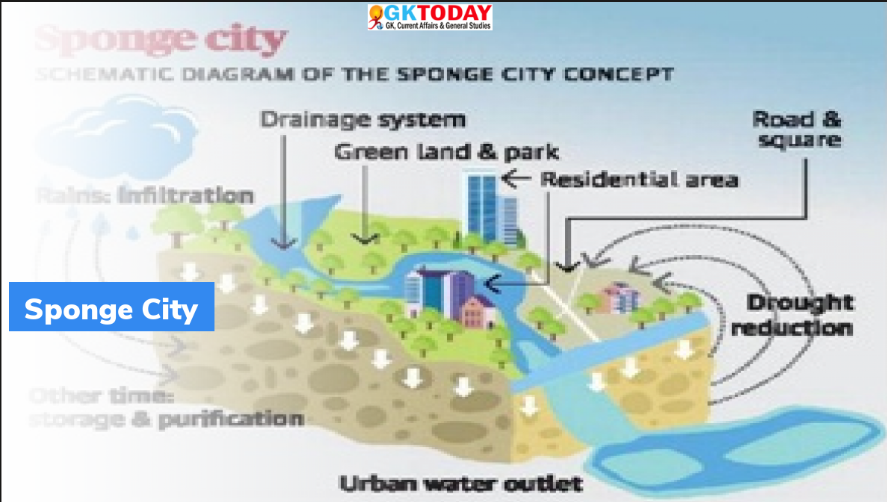
As extreme rainfall events become more frequent due to climate change, Chennai is increasingly adopting nature-based solutions inspired by the “sponge city” concept to improve urban resilience. The approach focuses on allowing rainwater to soak into the ground rather than rapidly draining it away through conventional concrete infrastructure. Through the restoration of wetlands, rejuvenation of lakes, expansion of urban green spaces, installation of permeable pavements, and improved stormwater management systems, the city aims to reduce flooding while enhancing groundwater recharge. These measures have gained urgency after devastating floods in 2015 and repeated episodes of urban inundation in recent years, highlighting the need for climate-adaptive urban planning.
Experts say sponge city principles not only help manage flood risks but also improve water security in a city that experiences both severe floods during the northeast monsoon and water shortages during dry periods. Chennai’s restoration of interconnected water bodies, including parts of the Pallikaranai Marsh and several lakes, has strengthened its capacity to store excess rainwater while supporting biodiversity and reducing urban heat. Urban planners and environmental researchers believe that integrating natural ecosystems with modern infrastructure can make rapidly growing Indian cities more resilient to climate change, offering a model that other flood-prone metropolitan areas across the country could adapt. More