News

What Are Zettajoules? The Scale Behind Earth’s Hidden Energy Imbalance

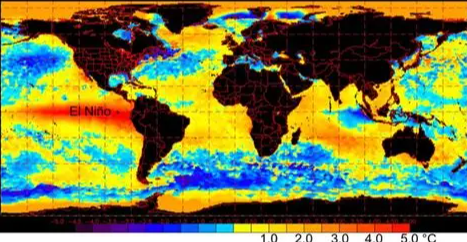
Zettajoules (ZJ) are an extremely large unit of energy—equal to 10²¹ joules—used by climate scientists to quantify changes in the Earth system’s heat content. Recent measurements indicate that Earth’s energy imbalance is on the order of ~0.5 to 1 watt per square metre, which may sound small but, when integrated across the entire planet and […]

What Are Zettajoules? The Scale Behind Earth’s Hidden Energy Imbalance Read More »

2°C Warming Could Push Far More Countries into Critical Food Insecurity, Study Warns

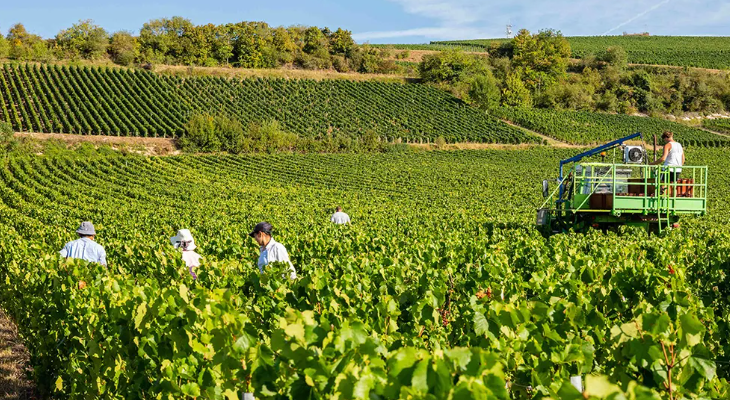
New climate-risk analysis finds that limiting global warming to 2°C may still trigger widespread and severe food insecurity across many more countries than previously expected. Researchers examining global crop yields and climate stressors warn that rising temperatures will intensify droughts, heatwaves, and rainfall variability, all of which directly reduce agricultural productivity. Key staple crops such

2°C Warming Could Push Far More Countries into Critical Food Insecurity, Study Warns Read More »

Toxic Tide of E-Waste from Wealthy Nations Floods Nigeria’s Informal Markets

Large quantities of discarded electronics from wealthier countries continue to enter Nigeria, where they are often sold through informal markets under the guise of reusable second-hand goods. In reality, a substantial share of these imports is already broken or near the end of its usable life. Estimates from environmental monitoring groups suggest that tens of

Toxic Tide of E-Waste from Wealthy Nations Floods Nigeria’s Informal Markets Read More »

Carbon Funding Drives Rewilding Efforts in South African Conservation Reserve

A conservation project in a private reserve in South Africa is demonstrating how carbon markets can directly support ecosystem restoration and wildlife recovery. By monetising carbon sequestration through reforestation and grassland restoration, the reserve has been able to generate funding that is reinvested into removing invasive species, restoring native vegetation, and expanding protected habitats. The

Carbon Funding Drives Rewilding Efforts in South African Conservation Reserve Read More »

Warming Turns Rocky Mountain Meadows Into Shrub-Dominated Landscapes

A long-term field experiment in the Rocky Mountains shows how a relatively small rise in temperature—about 2°C—can significantly alter an entire ecosystem. Researchers heated sections of a natural alpine meadow using infrared equipment to mimic future climate warming and tracked changes over several decades. Instead of increasing overall plant growth, the warmer plots saw a

Warming Turns Rocky Mountain Meadows Into Shrub-Dominated Landscapes Read More »

Study Finds US Responsible for Over $10 Trillion in Global Climate Damage Since 1990

New research published in Nature estimates that emissions from the United States have contributed to more than $10 trillion in climate-related economic losses worldwide since 1990. By linking rising global temperatures to national emissions, scientists found that decades of fossil fuel use have driven extreme heat, droughts, and reduced productivity across many regions—slowing economic growth

Study Finds US Responsible for Over $10 Trillion in Global Climate Damage Since 1990 Read More »

Palm Oil Expansion Continues to Encroach on Bornean Orangutan Habitat Despite Ecological Warnings

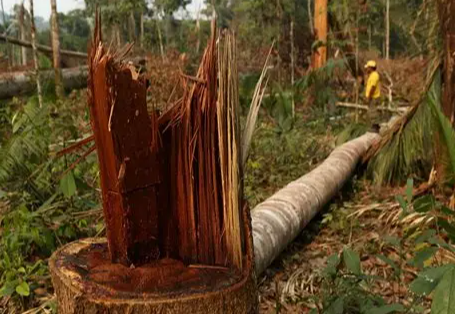
Deforestation linked to palm oil is still pushing into key habitats of the endangered Bornean orangutan, even as scientists and conservationists raise serious concerns. On Borneo, forest areas that serve as crucial feeding and migration zones are being cleared for new plantations, including regions previously flagged for their high ecological value. In Indonesia’s Kalimantan region,

Palm Oil Expansion Continues to Encroach on Bornean Orangutan Habitat Despite Ecological Warnings Read More »

 Earth’s 40,000-Year Tilt Cycle Found to Synchronize Antarctic Ice Growth with Subtropical Oceans

New research reveals that Earth’s 40,000-year axial tilt cycle—known as obliquity cycle—plays a crucial role in linking Antarctic ice sheet expansion with changes in ocean productivity far beyond the polar region. Scientists studying sediment cores and climate records found that when Earth’s tilt angle shifts, it alters how solar energy is distributed across the planet.

 Earth’s 40,000-Year Tilt Cycle Found to Synchronize Antarctic Ice Growth with Subtropical Oceans Read More »

Chernobyl’s Radiation-Eating Fungus Reveals a Surprising Survival Superpower

In the highly radioactive environment of the Chernobyl Exclusion Zone, scientists have discovered fungi that appear to not only survive but potentially thrive on radiation. Following the Chernobyl disaster, several species of “radiotrophic” fungi—particularly those rich in the pigment melanin—were found growing on reactor walls and contaminated soil. Studies suggest that these fungi may use

Chernobyl’s Radiation-Eating Fungus Reveals a Surprising Survival Superpower Read More »

Japan Activates Asia’s First 24/7 “Blue Energy” Plant Powered by Water Mixing

Japan has brought online Asia’s first osmotic power plant, marking a significant step in diversifying its renewable energy portfolio with a constant, weather-independent source. Located in Fukuoka, the facility generates electricity using pressure retarded osmosis (PRO)—a process where freshwater and seawater are separated by a semi-permeable membrane. As freshwater naturally moves toward the saltier side,

Japan Activates Asia’s First 24/7 “Blue Energy” Plant Powered by Water Mixing Read More »