News

Russia Expects Scrappage Fee Revenues to Climb Despite Falling Car Sales

The Russian government anticipates a significant rise in vehicle scrappage fee revenues, projecting an increase from 1.12 trillion roubles ($13.4 billion) in 2025 to nearly 1.65 trillion roubles ($19.7 billion) in 2026, representing a 46.7% jump. This forecast comes even as the domestic automotive market continues to struggle, with new car sales down 23% year-on-year […]

Russia Expects Scrappage Fee Revenues to Climb Despite Falling Car Sales Read More »

Malaysia Applauds EU’s Postponement of Anti-Deforestation Rule Amid Industry Concerns

The Malaysian Palm Oil Council (MPOC) has welcomed the European Union’s decision to delay the enforcement of its anti-deforestation regulation (EUDR) until December 2026. The council views the postponement as a critical opportunity to address operational challenges and structural gaps in the regulation. Despite Malaysian producers’ ongoing investments in sustainability initiatives, the MPOC argues that

Malaysia Applauds EU’s Postponement of Anti-Deforestation Rule Amid Industry Concerns Read More »

Urine-Powered Hydrogen Could Offer a Low-Cost Path to Clean Energy

Scientists at the University of Adelaide, in collaboration with the ARC Centre of Excellence for Carbon Science & Innovation, have unveiled two innovative electrolysis systems that generate hydrogen from urea found in urine and wastewater. These systems require 20–27% less electricity than conventional water electrolysis. One design uses a membrane-free setup with a copper-based catalyst

Urine-Powered Hydrogen Could Offer a Low-Cost Path to Clean Energy Read More »

Ocean Grain Farming Emerges as a Climate-Resilient Answer to Global Food Security

As rising seas and saltwater intrusion threaten fertile farmland, scientists are turning to the ocean for solutions. A groundbreaking study in Ambio highlights the potential of seagrass cultivation, particularly Zostera marina (nicknamed “sea-rice”), as a viable grain crop for the future. Projections show that by 2100, up to 620,000 km² of land worldwide could be

Ocean Grain Farming Emerges as a Climate-Resilient Answer to Global Food Security Read More »

North Sea Wind Farm Seaweed Project Achieves First Commercial Harvest in the Netherlands

North Sea Farm 1, situated within the Hollandse Kust Zuid offshore wind farm about 18 kilometers off Scheveningen, has completed its first commercial seaweed harvest. The project, managed by the non-profit North Sea Farmers and supported by €2 million from Amazon’s Right Now Climate Fund, covers five hectares and uses four underwater nets (each 50

North Sea Wind Farm Seaweed Project Achieves First Commercial Harvest in the Netherlands Read More »

Breakthrough Research Shows Plants Can Clean Microplastics More Effectively Than Existing Technologies

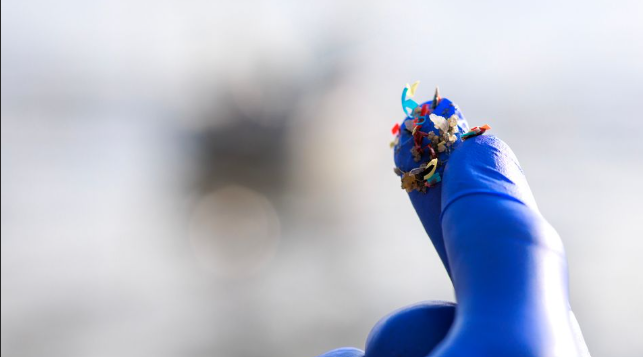
New scientific studies highlight that plant-based solutions can outperform conventional technologies in removing microplastics from water. Natural extracts from okra and fenugreek achieved removal rates of up to 90% in groundwater and 77% in freshwater, surpassing the widely used synthetic polymer polyacrylamide. Researchers say this approach could provide a sustainable, low-cost alternative for addressing the

Breakthrough Research Shows Plants Can Clean Microplastics More Effectively Than Existing Technologies Read More »

Breda Becomes EU’s First National Park City, Leading a Bold Urban Green Shift

In May 2025, Breda in the Netherlands was officially recognized as the first National Park City within the European Union, marking a milestone in Europe’s urban sustainability movement. The designation was granted by the National Park City Foundation in collaboration with Salzburg Global and World Urban Parks, following a rigorous peer review and on-site assessment

Breda Becomes EU’s First National Park City, Leading a Bold Urban Green Shift Read More »

Green Roofs Found to Block Microplastics in Urban Rainwater

New research from Tongji University in Shanghai reveals that green roofs can act as powerful filters for microplastics washed down by urban rainfall. In lab trials using rooftop models planted with Rhodiola rosea and Sedum lineare, the combination of vegetation and soil trapped up to 97.5% of plastic particles. Soil layers absorbed the majority, while

Green Roofs Found to Block Microplastics in Urban Rainwater Read More »

Singapore’s Love Affair with Shade: A Blueprint for Climate-Friendly Cities

For Singapore, shade is more than comfort — it’s a way of life shaped by history and climate. As early as 1822, Stamford Raffles mandated shaded “five-foot ways” in building designs to shield people from heat and sudden tropical downpours. This tradition grew under Prime Minister Lee Kuan Yew, when housing estates and walkways were

Singapore’s Love Affair with Shade: A Blueprint for Climate-Friendly Cities Read More »

Climate Change Could Make Aircraft Take-Offs Noisier, Study Warns

A new study suggests that rising global temperatures may unintentionally increase aircraft noise during take-offs. As the atmosphere warms, air becomes less dense, reducing the lift generated by aircraft wings. To compensate, planes climb at shallower angles, staying closer to the ground for longer and spreading noise across wider areas. Researchers estimate that by mid-century,

Climate Change Could Make Aircraft Take-Offs Noisier, Study Warns Read More »