
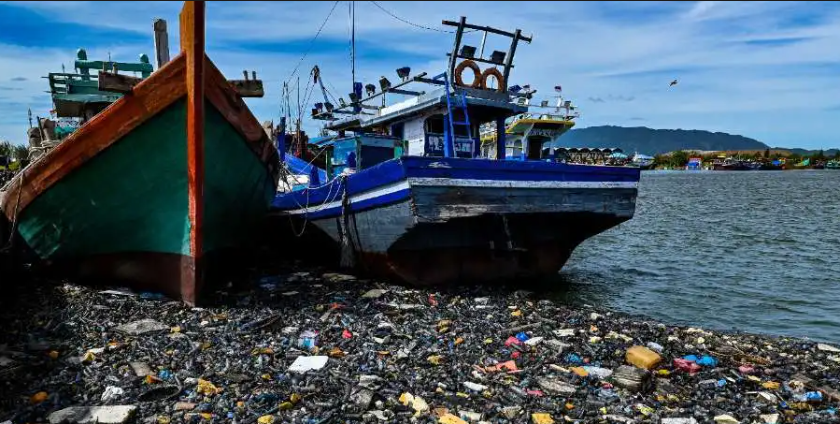
In Gampong Jawa, Banda Aceh, a traditional fishing practice called tarek pukat is struggling to survive as plastic and other waste continue to pile up along the coast. The practice dates back to the time of the Aceh Sultanate and involves groups of fishers working together to pull a huge net from the sea to the shore. But today, the nets are often filled with plastic bags, bottles, branches and other waste along with fish. During periods of heavy waste accumulation, the fishers have been forced to stop for weeks, because the rubbish makes the nets heavier and can tear them. Repairing a damaged net can take three to four days and cost up to 7 million rupiah (about US$390). For fishers already earning uncertain incomes, this is becoming too expensive. A good catch can bring 500,000 to 6 million rupiah per person, but when fish are scarce, earnings can fall to just 40,000–80,000 rupiah per person.
What makes the situation more worrying is that this is not only about fishing—it is about losing a piece of Aceh’s cultural and environmental heritage. The tarek pukat tradition is guided by the panglima laot, a customary fishing institution with rules that include protecting important marine species such as sea turtles and their eggs. But plastic pollution is making it harder for these communities to continue following a way of life that has survived for centuries. Banda Aceh’s Gampong Jawa landfill received around 90,783 tonnes of waste in 2025, while the landfill has been over capacity since 2019. Waste carried by rivers, tides and ocean currents keeps returning to the beach even after it has been cleaned. Research has also found microplastics in coastal sediments and in fish from the area. The local government is now introducing waste-collection points and floating barriers in rivers to stop rubbish reaching the sea, but Aceh’s experience sends a larger warning: when plastic reaches the ocean, it does not only pollute water—it can break fishing nets, destroy livelihoods and slowly push traditional communities away from the sea that has sustained them for generations. More