
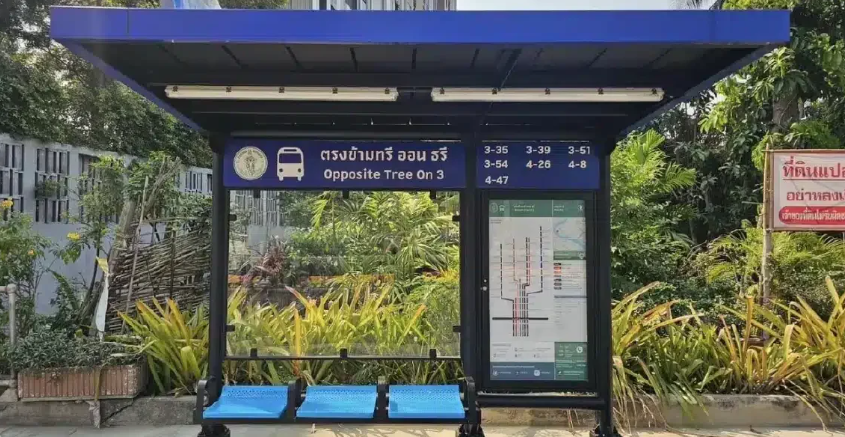
A new bus shelter in Bangkok is being described as the world’s first carbon-negative solar bus shelter, combining renewable energy with carbon-storing construction. Developed by Midsummer Siam and the Faculty of Architecture at Chulalongkorn University, the prototype uses engineered wood, which stores carbon absorbed by trees during their growth, together with lightweight thin-film solar panels. The solar roof can generate clean electricity for lighting, fans, mobile-phone charging and digital traffic information, showing how even small pieces of urban infrastructure can contribute to climate action.
The project offers a new approach to sustainable urban design, particularly for hot and rapidly growing cities such as Bangkok. Unlike conventional steel-and-glass shelters, the structure combines a carbon-storing material with on-site renewable energy generation, while solar-powered fans can improve comfort for commuters in Bangkok’s tropical climate. The initiative is also part of a wider collaboration exploring low-carbon construction, renewable energy integration and climate-positive urban development. If such designs can be scaled across cities, everyday infrastructure could become more than a service for people—it could also help store carbon, generate clean energy and reduce the environmental footprint of urban development. More