
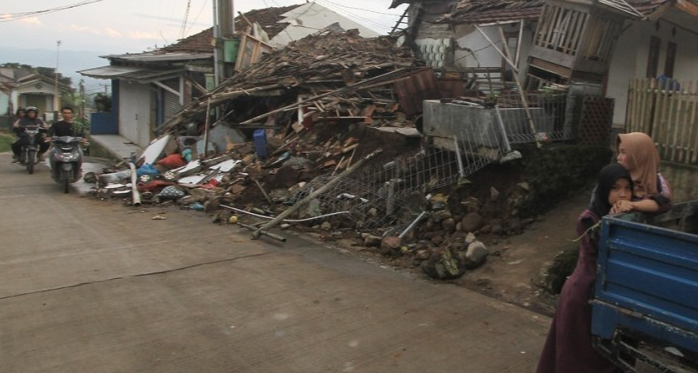
Indonesia’s 81st Independence Day was marked by grief this year as rescuers continued searching damaged buildings after a powerful magnitude 7.7 earthquake struck East Nusa Tenggara on August 15. The earthquake hit the Flores region at a shallow depth of about 10 kilometres, triggering landslides, destroying homes and damaging roads and public buildings. By August 17, the reported death toll had reached 68 people, with more than 200 injured, while around 1,300 homes were damaged and nearly 250 completely destroyed on Flores. More than 12,800 people were unable to return home and were staying in temporary shelters, many sleeping outdoors because of fears of continuing aftershocks. Authorities recorded around 1,576 aftershocks, making it difficult for residents and rescue teams to return safely to damaged areas.
While celebrations were taking place in Jakarta, many communities in Flores were instead searching for relatives, waiting for food and clean water and trying to find somewhere safe to sleep. Rescue teams were using helicopters and other equipment to reach isolated areas, while the government sent military and emergency teams with food, medicine and tents and established temporary field hospitals after some local medical facilities were damaged. President Prabowo Subianto asked Indonesians to pray for those affected and observed a moment of silence during the Independence Day ceremony. For people living through the disaster, however, the national celebration felt very different: homes had become rubble, roads were blocked by landslides and thousands were still waiting for help. The earthquake is another reminder of Indonesia’s vulnerability to major seismic disasters, particularly across the Pacific Ring of Fire, where communities must constantly live with the risk of earthquakes, landslides and tsunamis. More