
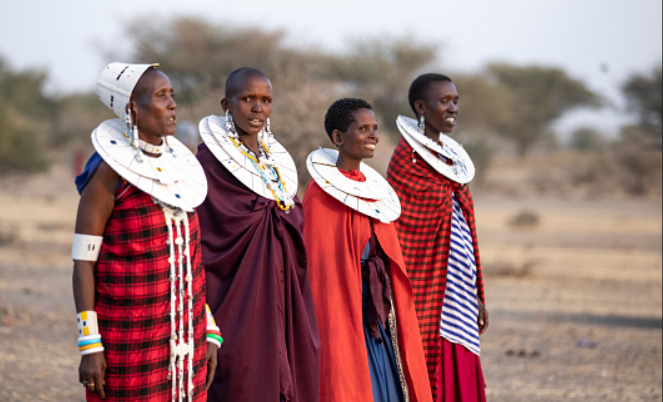
Across Kenya’s Maasai communities, women are increasingly becoming powerful actors in conservation, linking land restoration, wildlife protection, climate resilience and community livelihoods. In areas of the Maasai Mara and southern Kenya, women’s groups are involved in tree planting, rangeland restoration, sustainable livestock practices, water conservation and wildlife protection, while also creating alternative sources of income through beadwork and ecotourism. Their role is particularly important because Maasai women traditionally depend heavily on land, livestock and natural resources for household wellbeing. Community-led conservation initiatives such as the Maasai Mara Wildlife Conservancies Association have helped bring local communities into wildlife and landscape management, while conservancies across the Mara ecosystem collectively protect large areas of land outside the national reserve. These efforts are helping shift conservation from a model centred only on protected areas towards one in which communities themselves become custodians of the landscape.
What makes the leadership of Maasai women particularly significant is that conservation is being connected directly to economic security and climate adaptation. Restoring degraded rangelands can improve grazing conditions, protect biodiversity and strengthen communities against increasingly unpredictable rainfall and drought. Women-led enterprises also provide households with income that is less dependent on livestock alone, reducing pressure on fragile ecosystems. Yet challenges remain: land subdivision, drought, human-wildlife conflict and unequal access to land and financial resources continue to threaten pastoral communities. The lesson from Maasai women is therefore broader than simply planting trees or protecting wildlife. Conservation becomes stronger when the people who depend most directly on the land have a meaningful voice in deciding how it is used, restored and protected. Their experience shows that healing damaged landscapes is not only an ecological task—it is also about empowering women, strengthening local economies and rebuilding the relationship between communities and nature. More