
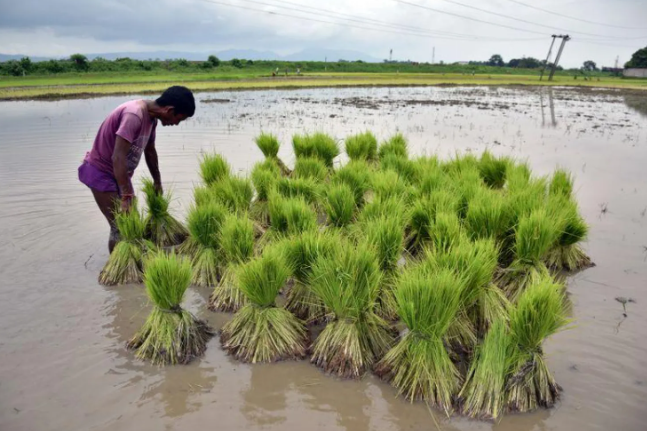
India’s summer crop planting has gathered pace after a revival in monsoon rains helped farmers recover from a slow start to the 2026 kharif season. By July 24, farmers had planted around 78.7 million hectares, only about 5% below the 82.6 million hectares covered at the same time last year, sharply narrowing the deficit from nearly a quarter at the end of June. Rice, cotton, soybean and corn planting all picked up as rainfall improved across major agricultural regions. Rice, one of India’s most important crops, covered 23.4 million hectares, compared with 24 million hectares last year, while soybean stood at 11.4 million hectares and cotton at 9.87 million hectares.
But the recovery is still fragile because India’s farmers remain heavily dependent on the timing and distribution of the monsoon. The overall rainfall deficit had narrowed to around 16%, from 40% at the end of June, yet some regions were still facing deficits of up to 40%. India is the world’s largest rice exporter, accounting for roughly 40% of global rice shipments, so the health of its monsoon has consequences well beyond Indian farms. A stronger crop could support food supplies and help contain prices, but uneven rainfall, prolonged dry spells or excessive rain later in the season could quickly reverse the gains. The 2026 season is therefore another reminder that for Indian agriculture, the question is no longer simply whether the monsoon arrives, but whether it delivers the right amount of rain, in the right places, at the right time. More