
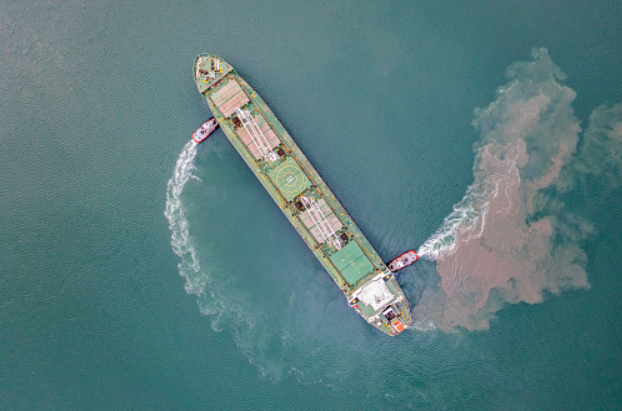
A growing oil slick has been detected off Oman after the sanctions-hit tanker Caroline Bezengi became stranded near the Hallaniyat Islands, with satellite imagery showing oil spreading from the vessel into surrounding waters. The tanker, which has been linked to Russia’s so-called shadow fleet, was carrying Russian crude and had reportedly stopped transmitting its automatic identification system (AIS) in June. Satellite images analysed by independent experts indicate that the slick has expanded substantially, with Greenpeace estimating it had reached around 600 square kilometres. The incident is particularly concerning because the vessel is located in a protected marine area off Oman’s Dhofar coast, where pollution could threaten sensitive coastal and marine ecosystems.
The spill exposes a much larger environmental problem created by the global shadow-fleet system—ageing or opaque vessels operating through complex ownership, flagging and insurance arrangements to move sanctioned oil. The environmental consequences, however, do not respect sanctions or shipping boundaries. The Hallaniyat Islands region supports Arabian Sea humpback whales, sea turtles, seabirds and other marine life, making the expanding slick a serious ecological concern. Oman has now begun deploying response teams to deal with the stranded tanker, but the episode raises a difficult question: who is ultimately responsible when a poorly regulated, sanctions-linked tanker pollutes a protected marine ecosystem? Satellite technology may be making these spills easier to detect, but detection is not the same as prevention—and governments may need stronger international rules for vessel safety, ownership transparency, insurance and environmental liability before another “shadow” tanker leaves a very visible environmental footprint. More