
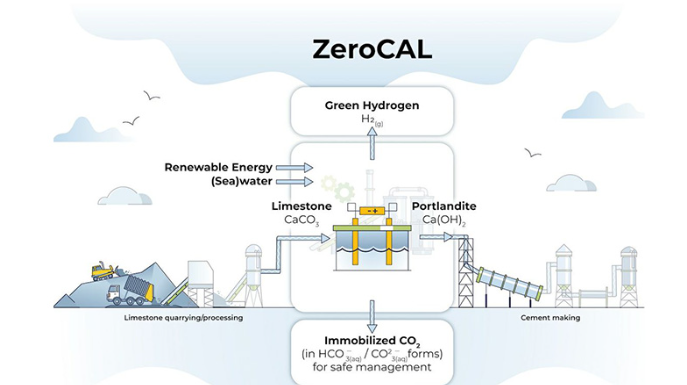
Researchers have developed an innovative cement manufacturing process that uses electricity instead of fossil fuels to produce key cement ingredients, significantly reducing both energy consumption and carbon emissions. Traditional cement production relies on coal, natural gas, or petroleum coke to heat limestone to temperatures of around 1,450°C, making the industry responsible for approximately 7–8% of global carbon dioxide emissions. The new method uses electrically powered heating technologies to achieve the required temperatures more efficiently, allowing the process to be powered by renewable electricity while reducing reliance on carbon-intensive fuels.
Beyond lowering emissions from fuel combustion, the technology also creates opportunities to capture and manage carbon dioxide released during the chemical breakdown of limestone, one of the largest sources of emissions in cement production. Researchers say the process could simplify carbon capture, improve energy efficiency, and make cement manufacturing more compatible with increasingly decarbonized electricity grids. As global demand for cement continues to grow alongside urbanization and infrastructure development, innovations such as electric cement production could play a crucial role in helping the construction sector achieve net-zero emissions while maintaining supplies of one of the world’s most widely used building materials. More