
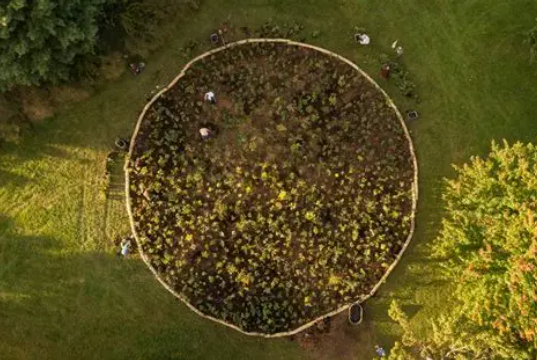
A few years ago, this small corner of Cambridge was little more than an ordinary urban space. Today, it is buzzing with birdsong, pollinators, and new plant life. Created using the Miyawaki method—a technique that plants a rich mix of native trees and shrubs close together—the pocket forest has grown rapidly into a dense, thriving ecosystem. The tightly packed vegetation encourages faster growth, helping young forests develop in just a few years rather than decades. As the canopy thickens, the site is already providing cooler temperatures, cleaner air, and much-needed habitat for local wildlife in the heart of the city.
What makes the Cambridge pocket forest remarkable is how quickly nature has responded. Insects, bees, butterflies, and birds have begun returning to the area, turning a small patch of land into a vibrant green refuge. Environmental experts see projects like this as a powerful tool for making cities more resilient to climate change, reducing urban heat, storing carbon, and reconnecting fragmented habitats. The success of the forest is a reminder that restoring nature does not always require vast landscapes—sometimes a tiny forest planted in the right place can spark an extraordinary ecological transformation. More