
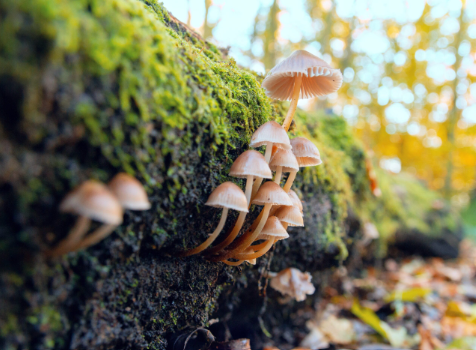
Scientists have uncovered new evidence showing that certain fungi play a surprising role in influencing weather patterns by releasing microscopic particles into the atmosphere that help clouds and rain form. Many fungi eject huge numbers of spores into the air, especially in humid forests and tropical ecosystems. Researchers found that some of these spores contain biological compounds capable of attracting water vapor and acting as “ice nuclei” or condensation particles around which cloud droplets can develop. In simple terms, fungi may help kick-start the physical processes that lead to rainfall. Studies in rainforest regions such as the Amazon rainforest suggest fungal spores are especially active during wet seasons, when forests and atmospheric moisture interact in a tightly connected climate cycle.
The discovery is changing how scientists understand the relationship between ecosystems and weather. Forests are no longer viewed as passive landscapes affected by climate alone—they may actively help regulate rainfall through biological activity. Researchers say fungal particles can travel long distances in the atmosphere and potentially influence cloud formation across entire regions. This could become increasingly important as deforestation, rising temperatures, and biodiversity loss alter fungal populations worldwide. Scientists warn that disrupting forest ecosystems may therefore affect not only wildlife but also local rainfall cycles, agriculture, and water security. The research adds to growing evidence that Earth’s climate system is deeply interconnected, with even invisible organisms beneath our feet helping shape the weather above our heads. More