
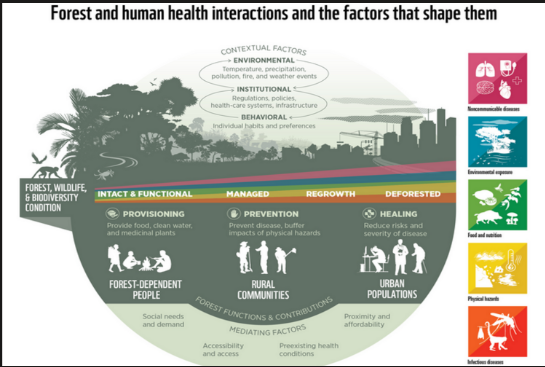
Scientists and public health experts are increasingly warning that protecting forests is not only an environmental priority but also a critical investment in human health. Forests help clean the air by absorbing pollutants and carbon dioxide, regulate temperatures during deadly heatwaves, protect freshwater supplies, and reduce the spread of certain infectious diseases by maintaining balanced ecosystems. Research shows communities living near healthy green spaces often experience lower rates of respiratory illness, cardiovascular disease, stress, and mental health disorders. Tropical forests such as the Amazon rainforest and the Congo Basin also act as major climate stabilizers, helping slow global warming that is already increasing health risks linked to extreme heat, malnutrition, and climate disasters.
Experts also warn that deforestation can increase the chances of dangerous diseases spilling over from wildlife to humans. When forests are cleared for mining, roads, or industrial agriculture, humans and livestock come into closer contact with stressed wildlife populations, creating conditions where viruses and pathogens can jump species more easily. Studies have linked ecosystem disruption to outbreaks of diseases such as Ebola, malaria, and other zoonotic infections. Forests additionally support millions of Indigenous and rural communities that depend on medicinal plants, clean water, and natural food systems for survival. Public health researchers now argue that conservation policies should be treated as preventive healthcare measures, because protecting ecosystems today may reduce future healthcare burdens, pandemic risks, and climate-related illnesses across the world. More