
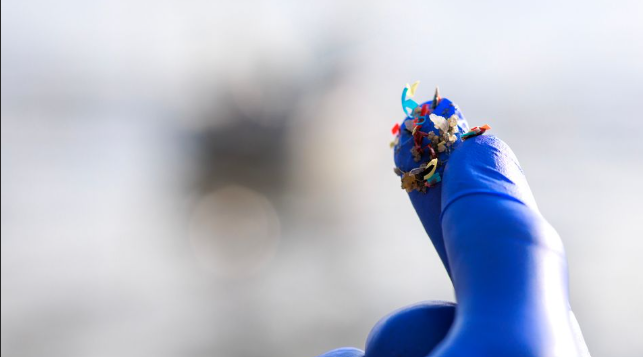
In a surprising twist, researchers studying microplastic pollution have found that part of what they were measuring wasn’t environmental contamination at all—but particles coming from their own lab equipment. The issue came to light when teams analyzing samples under microscopes detected polymer types commonly used in disposable laboratory gloves. Many labs rely on gloves made from materials like polyethylene and nitrile—the same substances often identified as microplastics—making it difficult to distinguish between genuine environmental samples and accidental contamination during handling. This realization has raised concerns about the accuracy of past studies, especially those reporting very high concentrations of microplastics in water, soil, and even air.
The discovery is now prompting stricter protocols across the field of Environmental Science. Researchers are beginning to switch to alternative materials, improve air filtration in labs, and introduce “blank controls” to detect contamination during experiments. Institutions such as the National Oceanic and Atmospheric Administration have long warned about the challenges of measuring microplastics due to their tiny size—often less than 5 millimeters—and their widespread presence. While the findings don’t invalidate the broader concern around microplastic pollution, they highlight how easily modern environments—and even scientific tools—can interfere with measurements. It’s a reminder that understanding pollution at a microscopic level requires not just advanced technology, but extreme precision in how research is conducted. More