
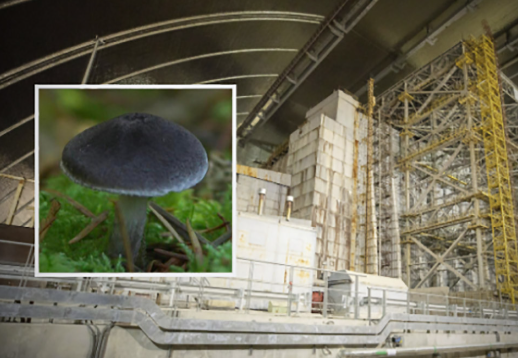
In the highly radioactive environment of the Chernobyl Exclusion Zone, scientists have discovered fungi that appear to not only survive but potentially thrive on radiation. Following the Chernobyl disaster, several species of “radiotrophic” fungi—particularly those rich in the pigment melanin—were found growing on reactor walls and contaminated soil. Studies suggest that these fungi may use melanin to convert gamma radiation into chemical energy, in a process sometimes compared to photosynthesis, but driven by radiation instead of sunlight.
Laboratory experiments have shown that certain species, such as Cladosporium sphaerospermum, grow faster in high-radiation environments than in normal conditions, indicating a possible evolutionary adaptation. Researchers are now exploring how this unique ability could be applied in fields ranging from radiation protection for astronauts in deep space missions to cleaning up nuclear waste sites on Earth. While much remains under investigation, these fungi are reshaping scientific understanding of life’s resilience—and hinting at biological solutions to some of humanity’s most extreme challenges. More