
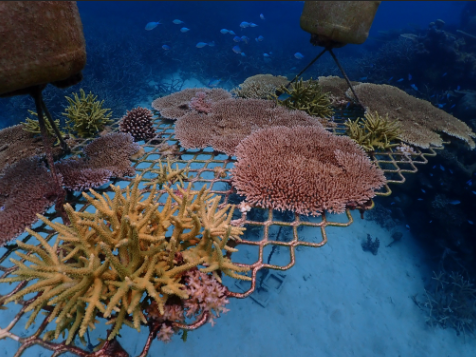
A large-scale reef restoration project on the Great Barrier Reef has successfully cultivated and transplanted about 40,000 juvenile corals onto degraded reef areas, representing one of the most extensive “coral seeding” efforts attempted so far. The corals were grown from spawn collected during natural mass spawning events and also propagated in controlled nursery systems, where early survival conditions—such as temperature, water flow, and nutrient levels—are carefully managed. They were then attached to small substrates (often ceramic or limestone-based) and placed onto reef structures to increase their chances of survival during the most fragile early growth stage.
Scientists say this method is designed to overcome one of the biggest bottlenecks in reef recovery: extremely low natural larval survival rates, which can fall below 1% in degraded or heat-stressed reefs. Early monitoring suggests higher settlement and survival in restored patches compared to untreated areas, with some sites showing improved coral cover and increased habitat complexity that benefits fish and invertebrate species. The project also targets areas previously hit by marine heatwaves linked to rising ocean temperatures, which have triggered multiple mass bleaching events across the reef in recent decades. However, researchers stress that while restoration can locally boost recovery, long-term reef survival still depends on reducing global greenhouse gas emissions and limiting ocean warming, which remains the primary driver of coral decline. More