
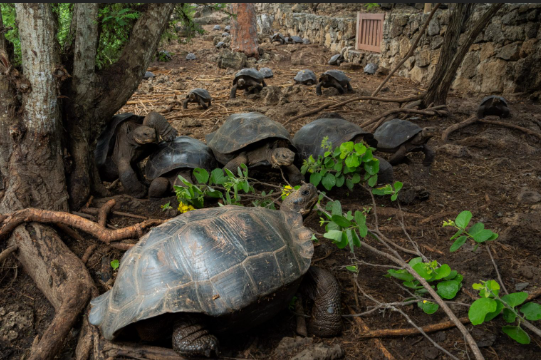
More than 1,500 giant tortoises have been reintroduced across parts of the Galápagos Islands in a major conservation effort aimed at rebuilding ecosystems disrupted by centuries of human activity and invasive species. The tortoises, once heavily reduced in number, are now being used as “ecosystem engineers,” helping to reshape vegetation patterns as they move slowly across the islands. Their grazing and trampling behavior is already altering plant communities, particularly by reducing dense shrub cover that had taken over in their absence.
Ecologists report that the returning tortoise populations are also restarting key ecological processes that had stalled for decades. As they feed, the animals help disperse seeds across wide areas, improving plant regeneration and increasing habitat diversity. Their movements create open patches in overgrown vegetation, allowing native plants to re-establish and improving conditions for other species. Scientists say this large-scale rewilding effort demonstrates how restoring a single keystone species can help repair entire ecosystems and strengthen natural resilience in island environments. More