
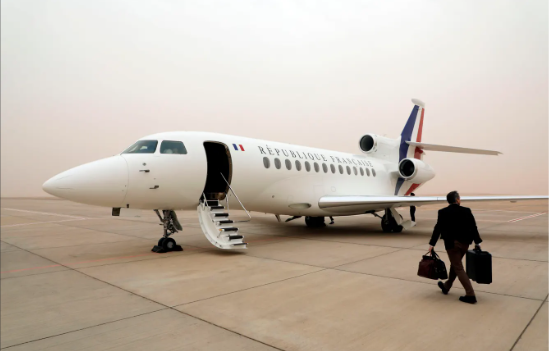
The Netherlands has approved a major tax increase on private-jet travel, shifting from an aircraft-weight fee to a distance-based model that will apply from 2030. Under the new system, passengers will pay €420 for flights under 2,000 km, €1,015 for flights between 2,000 and 5,500 km, and €2,100 for long-haul trips. This marks one of Europe’s strongest attempts to target high-emitting luxury travel; private jets account for 5–14 times more CO₂ emissions per passenger than commercial flights despite being used by less than 1% of travellers. The measure follows the country’s broader aviation reforms taking effect in 2027, which aim to better align flight taxes with real climate impact.
Dutch lawmakers say the new tax embodies the “polluter pays” principle and reflects rising public pressure to curb emissions from elite aviation — a sector responsible for a disproportionately large carbon footprint. For the global aviation industry, the move is a warning: governments are increasingly willing to regulate private jets, short-haul flights, and other high-emission segments. As Europe debates stricter climate rules and the ICAO pushes for cleaner aviation fuels, the Netherlands’ decision sets a precedent that other countries may follow. The lesson is clear — in a world racing toward net-zero, aviation will face deeper scrutiny, higher costs for high-carbon travel, and stronger incentives to adopt sustainable aviation fuels and cleaner technologies. More