
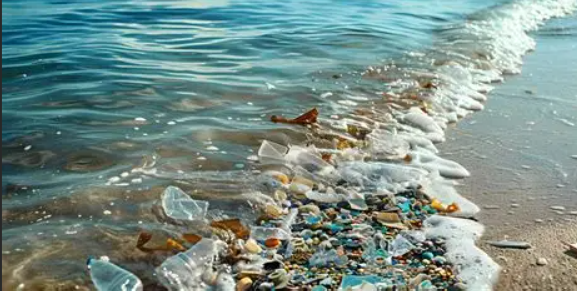
The breakdown of the latest global plastics treaty negotiations in Geneva — where countries again failed to agree on binding limits for plastic production and toxic additives — has pushed cities, researchers, and regional governments to accelerate their own solutions. As INC-5.2 ended without a deal, several U.S. states and European municipalities moved ahead with bans on “intentionally added microplastics” such as synthetic glitter, cosmetic microbeads, and rubber infill in artificial turf. These small particles, often overlooked in national policies, are among the most persistent contributors to soil and water contamination. Meanwhile, new regulations in parts of the U.S., Canada, and the EU are preparing to mandate microfibre filtration devices in washing machines — a step expected to cut synthetic fibre shedding by up to 80%, reducing one of the largest sources of secondary microplastics entering rivers and oceans.
At the same time, scientists are unveiling promising breakthroughs that could reshape environmental clean-up efforts. Research teams have developed next-generation nanofiber filtration membranes capable of removing 99.99% of microplastics — and even oil droplets — from wastewater, offering a scalable solution for treatment plants and industrial facilities. Some cities are piloting stormwater filtration grates designed to trap tyre-wear particles, which account for nearly 28% of microplastics found in the world’s oceans. Though the absence of a global agreement leaves major gaps in enforcement and international accountability, these local innovations show that meaningful progress is still possible. The fragmentation of global negotiations has ironically triggered a wave of experimentation, leadership, and practical action — proving that even in the absence of consensus, the fight against microplastic pollution is accelerating from the ground up. More