
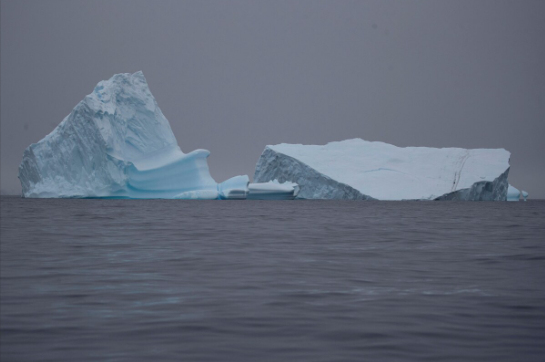
The Arctic has once again emerged as one of the fastest-warming regions on Earth, registering its highest temperatures in at least 125 years, according to a new assessment by the U.S. National Oceanic and Atmospheric Administration (NOAA). The report notes that average air temperatures across the Arctic from late 2024 through much of 2025 were among the highest ever observed, continuing a decade-long trend of exceptional warming. Scientists also recorded unusually high rainfall and sharply reduced snow cover, with early summer snow extent now about half of what it was in the 1960s—clear evidence that the region’s climate system is undergoing profound change.
This sustained warming has driven Arctic Sea ice to alarming lows. NOAA found that sea ice reached its smallest winter maximum since satellite monitoring began nearly five decades ago, while the oldest and thickest multi-year ice has almost disappeared, declining by more than 95% since the 1980s. As thinner, younger ice becomes the norm, the Arctic grows increasingly vulnerable to further warming, threatening wildlife, Indigenous livelihoods, and global climate stability. Researchers warn that changes in the Arctic do not remain isolated, but instead accelerate sea-level rise and disrupt weather patterns far beyond the polar region. More