
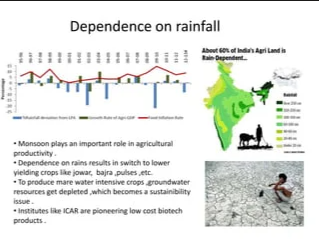
India’s monsoon is approaching its final stretch, but the rain clouds are not delivering enough water where farmers need it most. September rainfall is expected to remain below normal, adding to an already uneven monsoon season. Rainfall was around 35% below average in June and about 16% below normal in August, creating dry pockets across several agricultural regions. This matters because crops such as rice, soybean, maize, cotton and pulses depend heavily on soil moisture during key stages of flowering, grain development and seed formation. Too little water at these stages can reduce photosynthesis, restrict nutrient uptake and ultimately lower crop productivity.
There is also a hidden water story beneath the fields. When temperatures rise, evapotranspiration increases, meaning plants release more water through their leaves while moisture simultaneously evaporates from the soil. Scientists therefore look not only at how much rain falls, but also at soil moisture, temperature, rainfall distribution and the timing of precipitation. A few intense downpours cannot always compensate for weeks of dry conditions because much of the water can run off instead of reaching plant roots. With September rainfall also helping recharge soil and water reserves before India’s rabi cropping season, the current deficit could influence farming decisions well beyond the monsoon. For farmers, the real challenge is no longer simply getting rain—it is getting the right amount of rain, at the right time, in the right place. More