
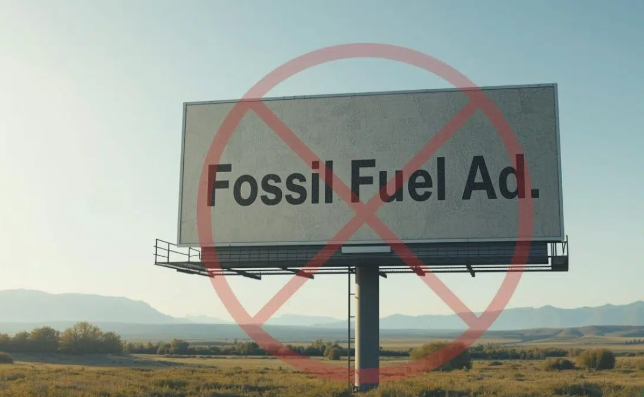
Genoa has become the second city in Italy to formally ban fossil fuel advertising in public spaces, following Florence’s decision earlier this year. The city council approved the measure in April 2026 with 23 votes in favour and 14 against. The ban targets advertising for fossil-fuel products and other high-carbon activities, including products and services associated with oil, gas and coal. The move comes as more than 50 cities around the world have introduced restrictions on advertising for highly polluting products, reflecting a growing effort to reduce the public promotion of carbon-intensive lifestyles.
The environmental argument behind the policy is that advertising does more than sell products it can also normalise high-emission lifestyles, including heavy car use, air travel and fossil-fuel consumption. Researchers have found that repeated advertising can influence perceptions of what is normal and desirable, while climate policies can be undermined when public spaces simultaneously promote carbon-intensive consumption. Genoa’s decision therefore represents a broader shift in urban climate policy: cities are beginning to question not only how fossil fuels are used, but also how their consumption is promoted. With cities such as Amsterdam, Sydney and Edinburgh also restricting fossil-fuel or high-carbon advertising, the movement is gaining momentum as part of efforts to accelerate the transition towards cleaner and more sustainable lifestyles. More